
Can Walls Become Bridges? The Quiet Power of “The Border Between Us”
In this book review, Ysabella Osses dives into Rudy Ruiz’s latest work, “The Border Between Us,” a powerful novel that explores what it means to grow up caught between worlds.
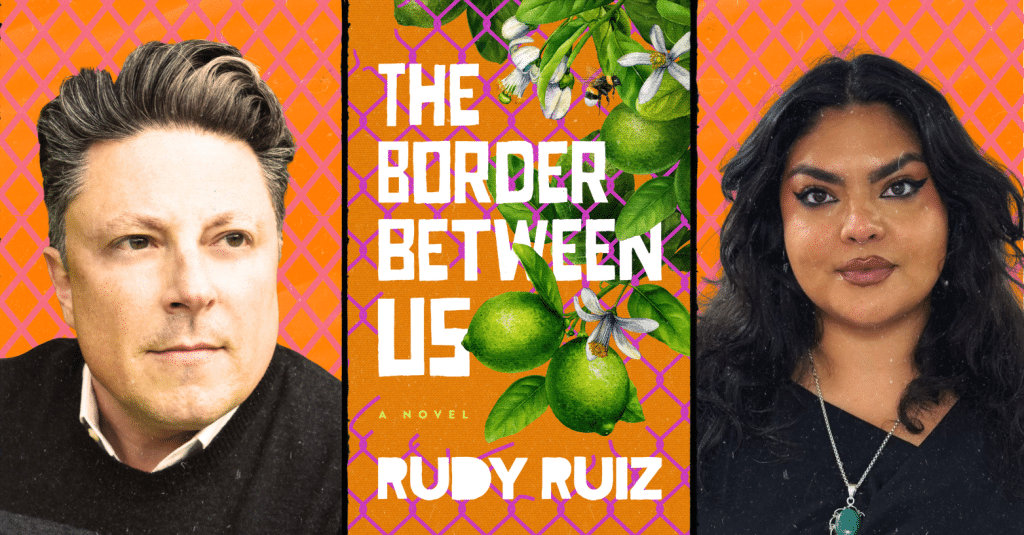
What is a border? Is it the steel and the cool touch of concrete slicing two countries apart, cold lingering in the bones when you stand before it? Is it the silent barrier between you and the father you resent, but whose choices you can’t escape? Or is it the barricade you build against your brother, whose disability swallows the love and attention you once thought was yours?
Imagine standing at the edge of the Río Grande with the wind brushing against your skin, as the call of border patrol sirens fade into the distance. Borders aren’t just physical. They exist in our families, in our hearts, in our memories, and in the dreams we dare (or don’t dare) to chase.
Rudy Ruiz’s latest book, “The Border Between Us,” a finalist in two categories for the 2025 International Latino Book Awards, is not just about geography. It’s about the invisible borders that define our lives, shape our identities, and linger long after we become adults. In this book, we meet Ramón, a Mexican-American boy moving between Matamoros, Mexico and Brownsville, Texas, caught between worlds and never fully at home in either.
When I spoke with Ruiz over a virtual interview, it became clear that the story of “The Border Between Us” mirrors his own lived experiences. Born and raised in Brownsville, Texas, he regularly commuted to Mexico to visit his family. That rhythm of movement between worlds shaped not only his bilingual, bicultural and binational childhood, but also the emotional landscape of his work.
“A lot of times, for people growing up far, far away from nations of origin, it’s a lot harder to stay connected to family, to culture, to language, so I was very blessed in that regard and I try, in all of my writing, to keep that world alive and to share it with readers to open, hopefully, some people’s minds […] to understand that there’s more to the border than what they see on the news. There’s more to Latino immigrants than what the politics of the day seem to promote,” Ruiz shared.
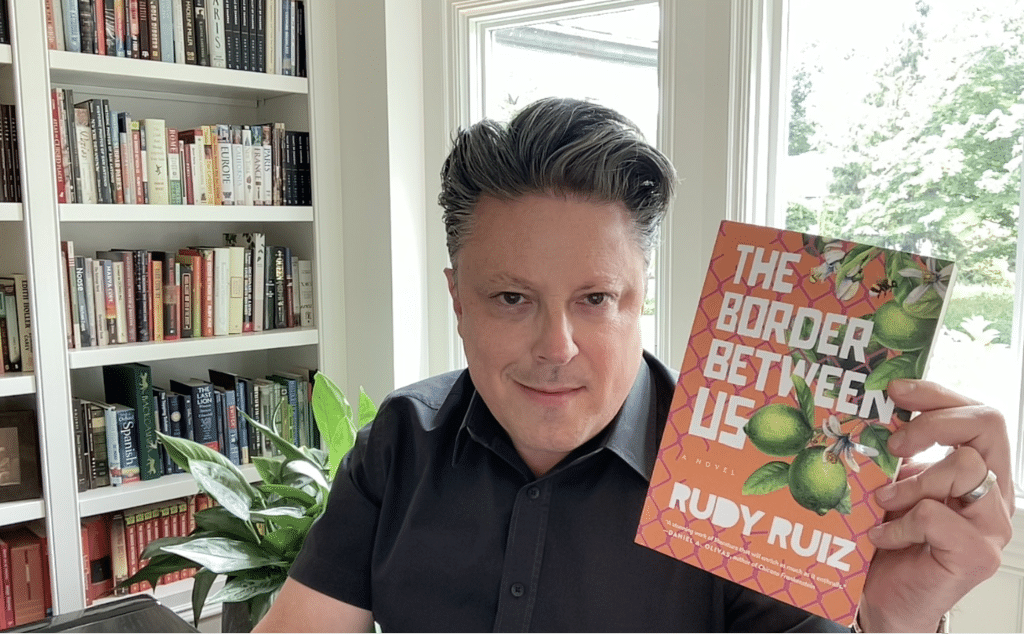
In “The Border Between Us,” published in August 2024, Ruiz paints a vivid picture of Ramón’s life: the crowded streets and familiar markets of Matamoros, the quiet neighborhoods and small joys of Brownsville, the smells, the sounds, and the tiny moments that make up a life lived across borders. Through Ramón, we feel the joy, the grief, the longing, and the contradictions of growing up in the in-between, making the story both deeply personal and hauntingly familiar to anyone who has lived this way.
At the center of the story is Ramón’s father, a restless and often reckless entrepreneur always chasing the next big idea, sometimes at the expense of his own family. Their relationship drives the novel: disappointment, unspoken love, and the constant hunger for approval that never fully arrives. And yet, even when men fail, women hold everything together.
Reading this book, I began to see a pattern: women are the ones who constantly stitch families together. Rather than asking why, let’s assert a truth: it is women who hold the emotional fabric of families, often unseen and uncredited. This labor has deep roots in patriarchy, allowing the myths of the “American Dream” to remain unchallenged even as it leaves our people’s hands raw and bleeding because we have been gripping it too tightly for centuries. For immigrants and their children, survival comes before dreaming, and this is perhaps the most devastating border of all.
That tension between survival and aspiration, between the dream and what it demands, runs deep in the novel and it’s exactly the balance Ruiz wanted to explore: “What I think I was exploring there was that the American dream, and achieving that sort of material [affluent] version of the American dream, usually requires, for someone from Ramón’s background, a lot of sacrifice. Not just in terms of hard work […], but it requires a different kind of sacrifice, which is your ideals, sometimes your culture, sometimes your family, sometimes your pride.”
Are people like Ramón (people like you and me) ever truly allowed in these “American” circles? Will we always be seen as outsiders, standing at the edge of doors we cannot open because of our roots? Can we sell our identity and our culture for profit? And if we do, are we betraying the people who raised us and the values they taught us?
Class becomes yet another border as Ruiz makes the lines of two different societies almost tangible, like walls of steel, locked doors, and invisible fences, each with keys that only some people hold. And still, even in the shadows of these barriers, he shows the beauty within these lives: moments of laughter that catch you off guard, quiet victories that go unseen, resilience that refuses to break, and a community that persists, stubborn and bright.
Yet even amid those divisions, Ruiz insists on imagining a different kind of border defined not by exclusion, but by connection. As he put it: “It was always my dream to tell stories about my culture, my people, my part of the world, and to share those stories with the world at large. And I grew up in a time when the border was all about building bridges, not walls. And so that philosophy of building bridges between different cultures, different communities, still drives my work and inspires me.”
The walls in Ramón’s world, between countries, between classes, between family expectations and his own dreams feel very permanent. However, Ruiz also shows that even the strongest walls can become bridges. The barriers that separate Ramón from opportunity, from circles that seem out of reach, from parts of himself he is afraid to show, can also become the foundation for connection. A bridge made from a wall doesn’t erase the wall: it uses it. The very thing that divides can also hold the path forward.
True to that spirit of transformation, Ruiz hopes readers carry something beyond the pain and politics of borders; a sense of what can be built in between them. “The book talks about borders, but it really talks about how we can come together at those borders and how we can heal the wounds that have been inflicted upon us because of these borders. To me, it’s always optimism, so even though it’s dark times, I want [readers] to take away hope.”
The borders we inherit, the walls we face, and even the parts of ourselves we try to lock away can all become tools for connection, understanding, and survival. In the spaces between, we find the possibility of crossing over, of reaching out, and of creating a world that holds us.
Author

Related Articles
Change Is Not Punishment: What Sacred Lessons Teaches Men About Freedom
Men are taught to stay hard and unshaken, but what happens when the weight of that becomes too heavy to carry?
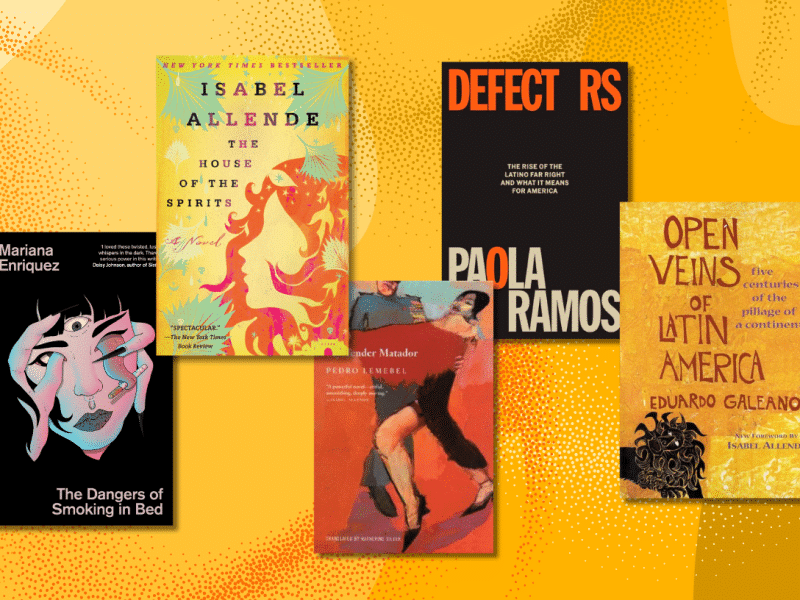
These 5 Latine Reads Will Stay With You Long After the Last Page
Guest literature contributor and book lover Ysabella Muñoz Osses curated a list of powerful reads by Latine authors that remind us that our stories are as fierce and enduring as we are.
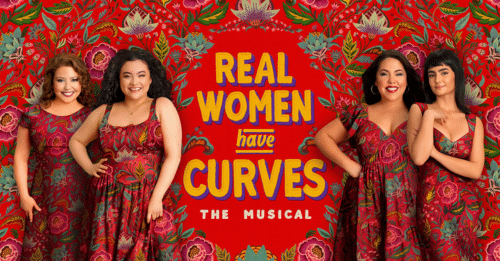
“Real Women Have Curves” Is Closing on Broadway—Here’s Why You Need to See It
“Real Women Have Curves: The Musical” brought immigration, identity, and ambition to Broadway with a story that’s as timely as it is powerful.