The Day Venezuela’s Future Became Even More Uncertain
Third installment in the “Voices of Venezuela” essay collection: “Only a few days into 2026 and the future already feels uncertain,” is what my short journal entry reads for January 03, 2026, the day the U.S. launched an illegal military operation in Venezuela.
Editorial Note: The author’s identity has been verified by our editorial team. Due to ongoing local safety concerns, we are publishing the author under a pseudonym.
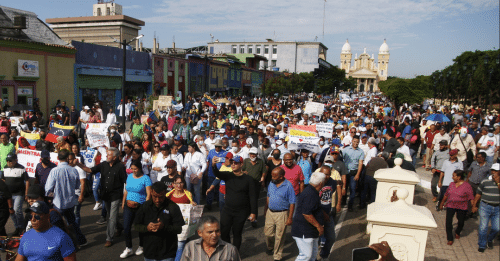
“Only a few days into 2026 and the future already feels uncertain,” is what my short journal entry reads for January 03, 2026, the day the U.S. launched an illegal military operation in Venezuela, dropping bombs on Caracas and capturing President Nicolás Maduro and his wife.
When I think of the last few days, I feel anxious and overwhelmed. While many Venezuelans are relieved and even joyful that something has finally been done about one of the people in power who have had their boots on our necks for decades (and I understand why, I truly do), I can’t shake the apprehension.
Among friends and family, many think it couldn’t possibly get worse than it already is, and this sentiment is echoed by Venezuelan discourse online. Our corrupt officials were already stealing our oil and resources, we were already just scraping by. But I disagree. It can always get worse.
Do we really believe an administration that has spent the last year violently and, in some cases, illegally, deporting immigrants from the United States in record-breaking numbers, including Venezuelans, cares about freeing our people?
I don’t believe that for a second. And I like to think most Venezuelans don’t either, but we’re tired, we want change, and many believe this is it. And I hope it’s for the better, but I can’t help but have reservations.
Two things can be true at the same time: we can agree that Maduro belongs behind bars (so does the entire regime), and also condemn an illegal U.S. military intervention that would be considered an act of war if it happened anywhere else. To me, it doesn’t feel like liberation, it feels like a transition from one unscrupulous authority to another.
At a January 3, 2026 press conference at Mar-a-Lago, President Trump said the U.S. would “run the country until such time as we can do a safe, proper and judicious transition.” Hearing those words sent a chill down my spine. History tells us what indefinite transitions look like when powerful nations insert themselves into weaker ones: resources get extracted, local collaborators are empowered, and we the people absorb the cost of it.
Maduro was never the only one pulling the strings. He was the most visible face of a much larger, deeply entrenched, corrupt system. Are we to believe that the remaining senior members of the Maduro regime won’t have a hand in things anymore?
As much as I want to feel the same way that many Venezuelans do, that this time will be different—that yes, they may exploit our resources, but they’ll also create jobs, boost the economy, offer opportunity, and leave us better than before—I simply can’t. Hope feels hollow if I ignore precedent.
Let’s consider the track record: Over the past 25 years, U.S. interventions in Iraq, Afghanistan, and Libya were justified using the same language now being applied to Venezuela: liberation, human rights, security. Yet Iraq endured years of sectarian violence and mass displacement after the 2003 invasion. Afghanistan, after two decades of occupation, returned to Taliban rule amid humanitarian collapse. Libya descended into civil war and fragmentation, lacking a unified government for years.
Durable peace and stability wasn’t the result of any of these interventions. I want to think Venezuela will be the exception, but I don’t have the evidence to back it up.
At the end of the day, I have more questions than answers, more fears than hopes and dreams. I don’t know what will happen next.
I do know that I want us Venezuelans to know prosperity in our country, I want families to be reunited, I want people to be able to practice the professions they actually studied for and make a difference here, I want us to live, not just settle for what little we can scrape up for ourselves. But I don’t believe this intervention alone will get us there.
We’ve already survived so much, and, while we shouldn’t have to prove our resilience again and again, I do believe we have the mettle to survive even more and carve a real path to freedom for ourselves. Enduring is how we resist, and while I don’t know what a “perfect” plan would look like to restore our country, I believe in our capacity to thrive in whatever conditions we find ourselves next.
Andrea Gomez. Maracaibo, Venezuela.
Find the next essay in the “Voices of Venezuela” collection here.
Related Articles

How Catholic Guilt Shaped My Life
“Catholic guilt” is a term used to describe the feeling of remorse that arises when someone violates the moral standards taught during their Catholic upbringing. Natalia Saláis, Luz guest contributor, shares her experience of growing up Catholic and the process of unlearning to heal from this guilt.
Venezuelans are full of envy. But not in the way you might think. Let me explain.
Final installment in the “Voices of Venezuela” essay collection: January 3 marked a new chapter, one in which the world finally turned its attention to Venezuela. Violently, as our rulers have always imagined.
Between Joy and Fear
Fourth installment in the “Voices of Venezuela” essay collection: We were all expecting the events that had been announced, but we never imagined they would unfold so quickly.