
Do You Know Bolivian Cholitas? Here Are 4 Powerful Ways They’re Breaking Stereotypes
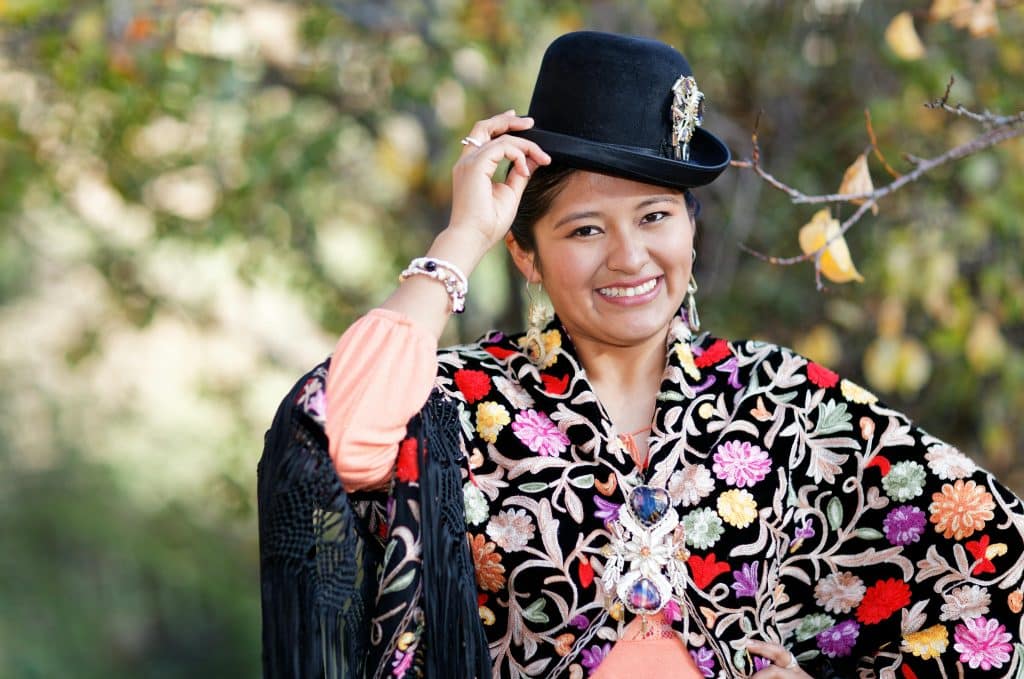
Every year on August 9, the world pauses to recognize the strength, survival, and contributions of Indigenous communities through the International Day of the World’s Indigenous Peoples. It’s a moment to reflect, but also to celebrate. And this year, we’re spotlighting a group of women who have turned centuries of exclusion into a vibrant force for cultural pride, activism, and social change: Bolivian cholitas. Once silenced, now unstoppable, cholitas are challenging every assumption made about Indigenous women without ever taking off their signature polleras or bowler hats. Here’s what you need to know about who they are, what they wear, and how they’re shattering stereotypes one bold move at a time.
Who Are Bolivian Cholitas?
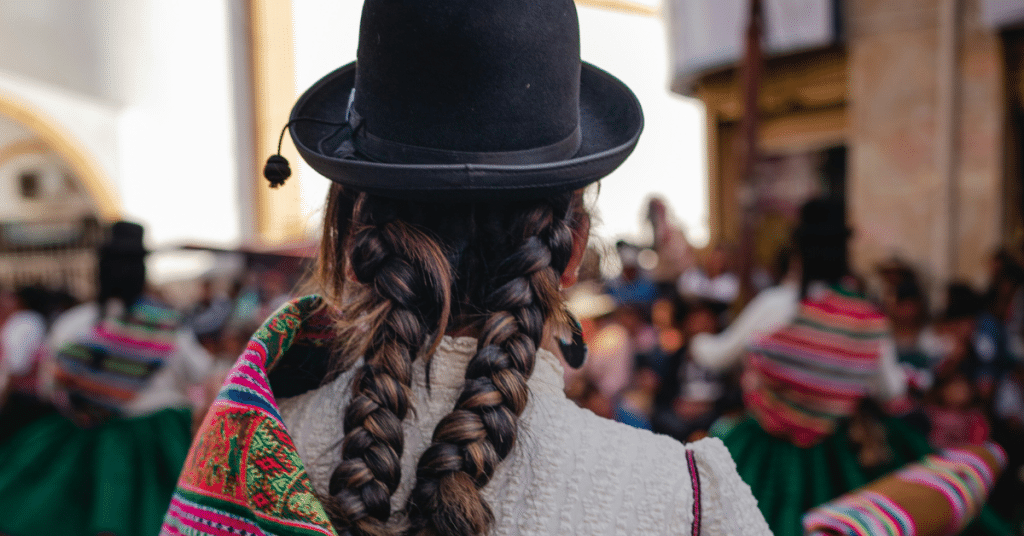
The word cholita was once a slur against Indigenous women. Derived from “cholo,” it historically referred to people of mixed Indigenous and European ancestry, often with disdain. But in recent decades, Indigenous Bolivian women, primarily Aymara and Quechua, have reclaimed the term. Today, cholita is a badge of cultural resilience, dignity, and feminine power. You’ll see cholitas everywhere in Bolivia: in markets, parliament, newsrooms, and on fashion runways. They’re bankers, activists, entrepreneurs, mothers, and leaders, often all at once. And they do it all while wearing clothes that used to mark them as “less than,” as a statement of Indigenous visibility and resistance.
What Their Traditional Attire Really Means
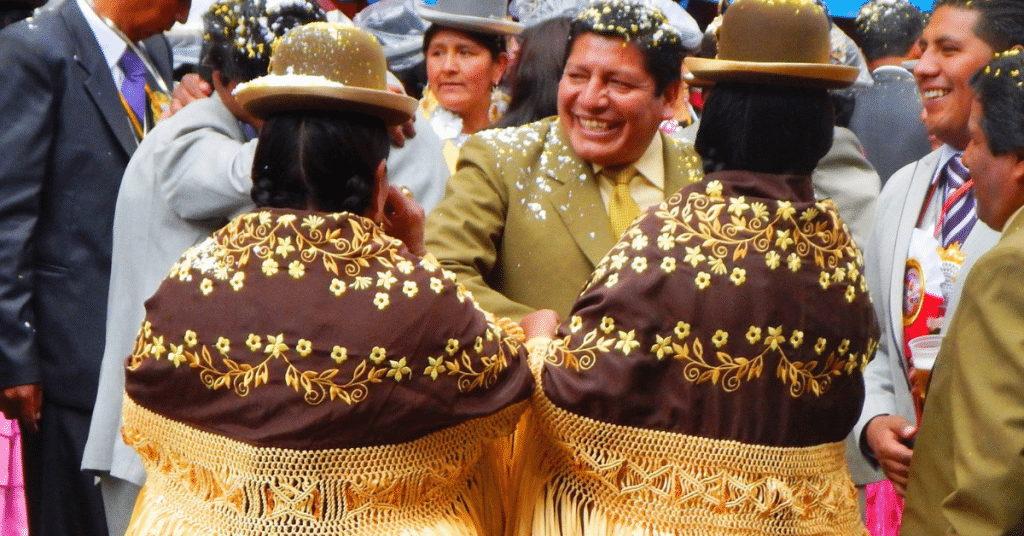
The cholita outfit is impossible to miss, but it’s often misunderstood. Every part of it is intentional, layered with meaning and history. The pollera, a pleated, multicolored skirt, was originally imposed by Spanish colonizers. Cholitas have turned it into a symbol of pride. The manta, or shawl, is as practical as it is beautiful. Worn across the shoulders or used to carry children, it also signals regional and social identity. The bowler hat, introduced by Europeans in the 1920s, is now an iconic cholita accessory. How it’s worn can even indicate marital status. Long, carefully braided hair, sometimes adorned with tassels, reflects generational continuity and cultural reverence, and jewelry completes the cholita look during festivals or formal occasions, often communicating wealth, style, or family history. Here’s how cholitas wear these traditional clothes while shattering stereotypes:
Cholitas in the Ring: Wrestling with Power
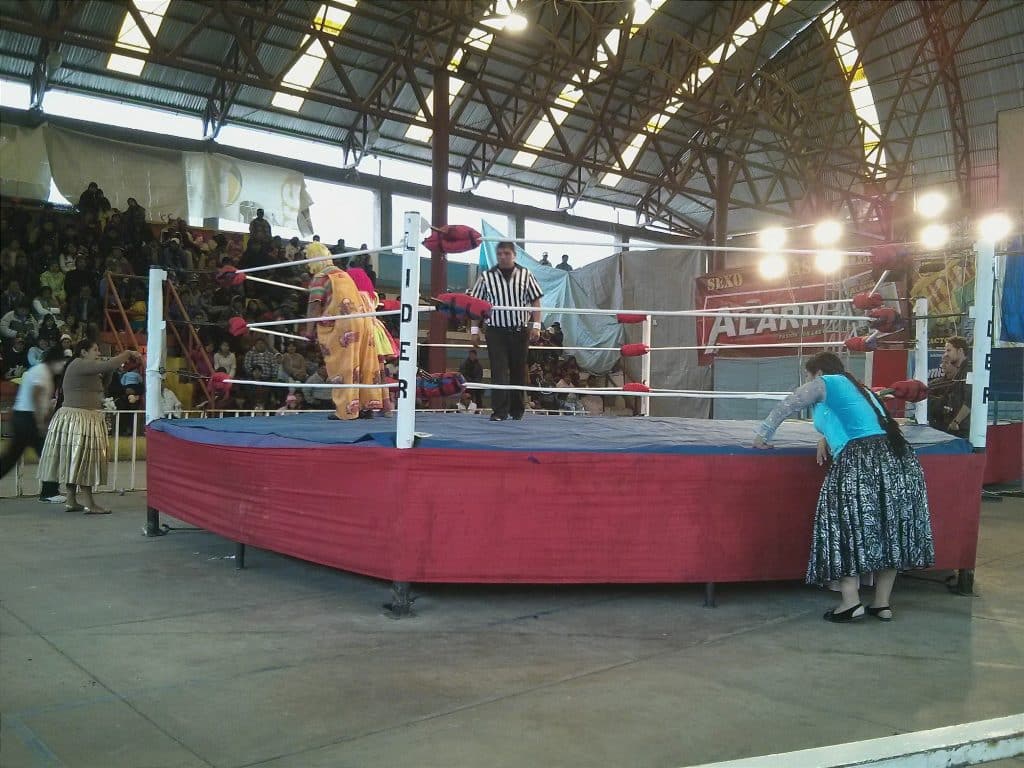
Known as Cholitas Luchadoras, these Indigenous women have electrified Bolivian arenas since the early 2000s, making the world of professional wrestling much more interesting and diverse. Inspired by Mexican lucha libre, the movement began as a way to revitalize wrestling crowds. When Aymara women stepped into the ring, braids flying and shawls twirling, they turned the sport into a vehicle for cultural pride and resistance.
Performances take place weekly in El Alto and La Paz, where crowds pack venues like the Multifunctional Center to watch these women perform. Wrestlers like Carmen Rosa “La Campeona” and Yolanda “La Amorosa” are now national icons. And far from being a side show, cholita wrestling has become a serious cultural force, with wrestlers participating in women’s rights campaigns, civic outreach, and community organizing. In 2025, the sport continues to evolve: tourist crowds are growing, media interest is surging, and the women remain firmly in charge.
Scaling Heights: Las Cholitas Escaladoras
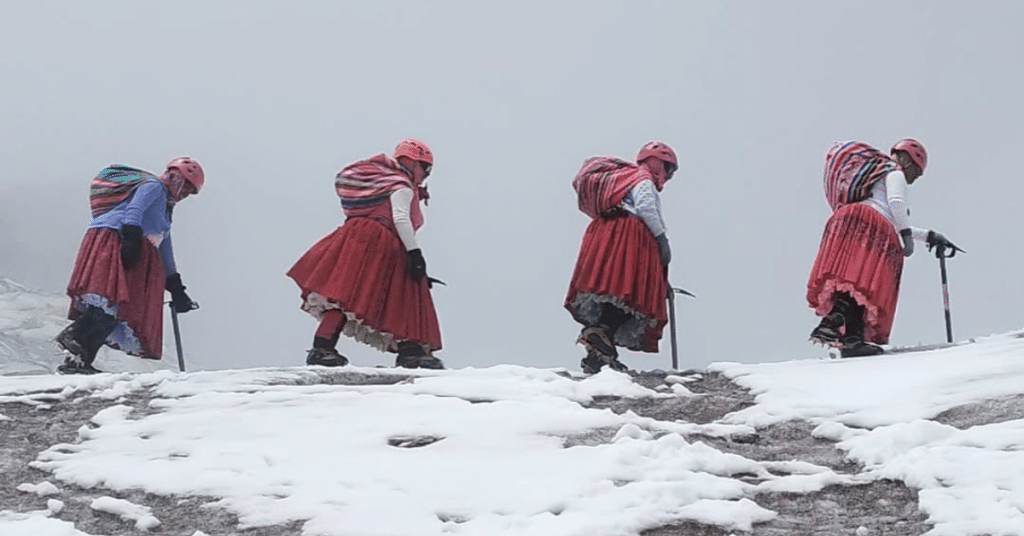
Known as Las Cholitas Escaladoras, these Aymara women mountaineers have shattered every stereotype about who belongs in high-altitude sports. Hailing from El Alto and La Paz, they’ve climbed some of the Andes’ tallest mountains, including Huayna Potosí, Illimani, and even South America’s tallest summit, and Aconcagua, all in traditional dress. Many of the group’s founding members, like Cecilia Llusco and Lidia Huayllas Estrada, are now certified guides and mountain rescuers. They’re also mentors, training a new generation of girls and teenagers. In 2025, Cholita mountain climbers are expanding trekking experiences that blend traditional alpaca weaving workshops with glacier climbs, deepening the cultural and economic impact of their work. They’ve also set their sights on international expeditions, Mount Everest included, proving that no altitude is off-limits when you climb with purpose.
Skating in Skirts: Imilla Skate Rewrites the Rules
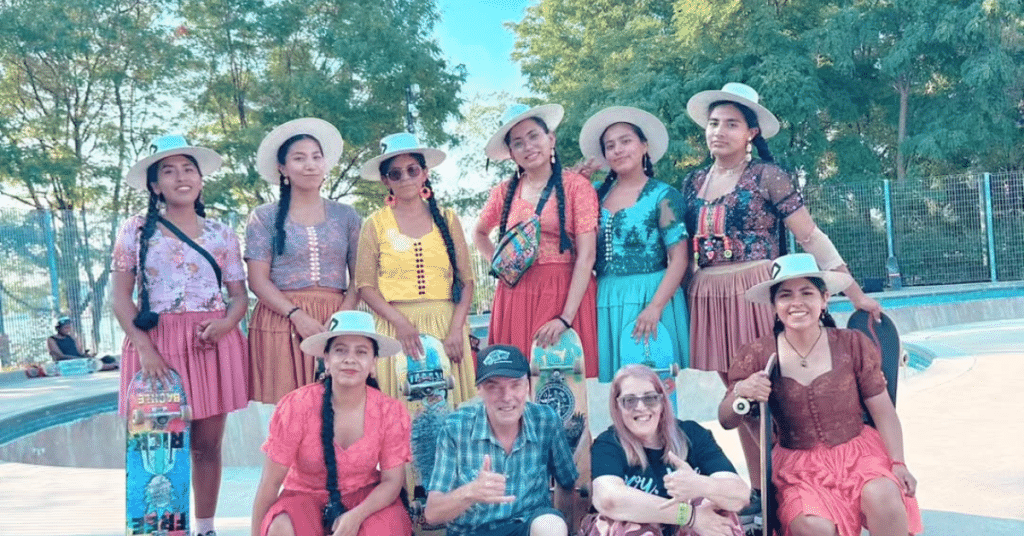
Imilla Skate, founded in 2019, is an all-female collective of Aymara and Quechua skaters who ride in full traditional dress: polleras, braids, and bowler hats. It’s not just for show. Their visibility is the point. In a country where Indigenous girls are often told to keep their heads down, Imilla Skate carves out space for confidence, visibility, and joy. In 2024, they were featured at the Smithsonian Folklife Festival in Washington, D.C. In 2025, they’re starring in multiple documentaries, including a Vans-produced film and international shorts by NOWNESS.
But their real legacy may be at home: they’re currently building a dedicated community skatepark, offering workshops for girls, and launching Bolivia’s first Indigenous-led skate school. Founders like Dani Santiváñez and Deysi Tacuri Lopez have become powerful voices for youth empowerment and Indigenous pride. Their motto? “When you fall, you have the power to get back up.” Whether on a board or in life.
Fighting Back: Self-Defense and the Power of Warmi
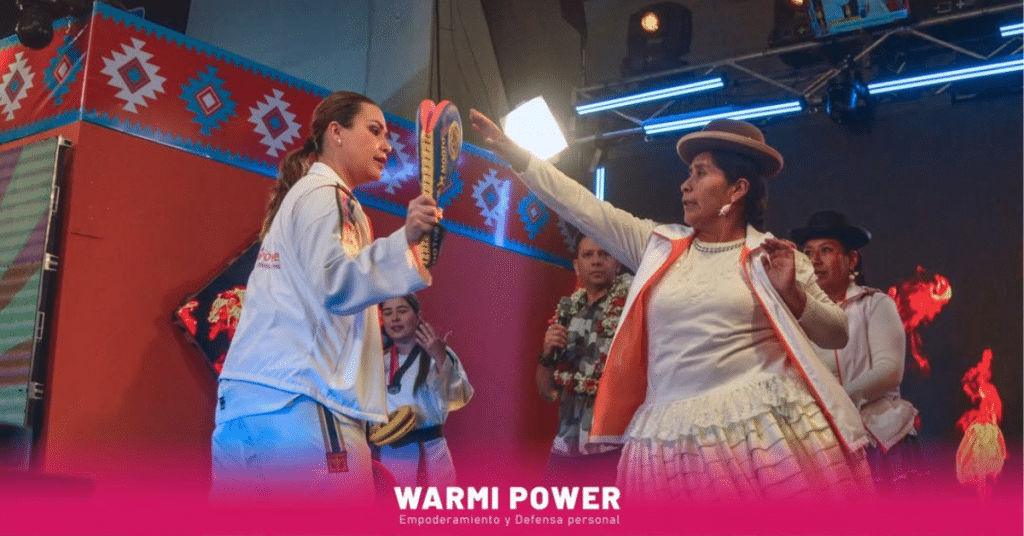
In a country where most women experience gender-based violence, self-defense is survival. Enter Warmi Power, a martial arts project in El Alto tailored for Indigenous women. Led by and for cholitas, the program teaches taekwondo and self-defense to over 20,000 women as of 2025. And it’s not just about physical strength. Their workshops include mental health support, confidence building, and Indigenous cultural awareness.
The project’s success has earned it Bolivia’s Premio Maya, the country’s highest civic honor. But more importantly, it’s sparked a regional movement. Across Latin America, similar programs are emerging, inspired by the Warmi model of resistance rooted in tradition. The visibility of cholitas in martial arts has also strengthened other public spaces, from Cholita Wrestling to community leadership roles supported by groups like CNAMIB (National Confederation of Indigenous Women of Bolivia).
Author




_2014-02-16_19-28.jpg)