
The Radical Power of Belonging in “Dreaming of Home” by Cristina Jiménez
In her new memoir, “Dreaming of Home,” Cristina Jiménez, the co-founder of United We Dream, tells the story of how fear, silence, and exclusion became fuel for strategy, community, and power.
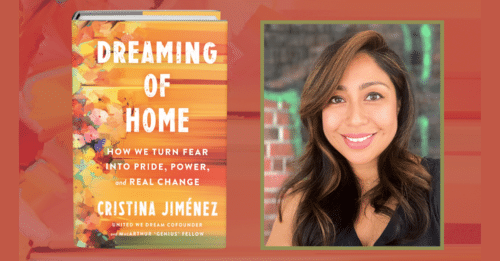
Cristina Jiménez has never waited for permission, neither to survive nor to lead. As the co-founder of United We Dream and United We Dream Action, the largest immigrant youth-led organizations in the U.S., she has long been a driving force in a movement rooted in radical imagination, bold strategy, and lived experience. Her memoir, “Dreaming of Home: How We Turn Fear into Pride, Power, and Real Change,” hit the shelves on May 27, 2025, as both a personal reckoning and an urgent invitation to reflect, organize, and dream bigger.
Born in Ecuador, Jiménez immigrated to the U.S. at the age of 13 with her family, fleeing economic and political instability. They landed in Queens, New York, crammed into a one-bedroom apartment, undocumented and afraid. That fear of separation, detention, or deportation defined her adolescence, as it has for millions of other Latinos in mixed-status families.
“Dreaming of Home” follows the transformation of that fear into power through collective action, telling the story of how it ultimately led to the co-founding of United We Dream (UWD), which, under Jiménez’s leadership, grew into a network of over a million members. UWD organized, mobilized, and advocated for administrative relief for undocumented immigrant youth, which directly contributed to the enactment of Deferred Action for Childhood Arrivals (DACA) in 2012, a program that has protected nearly a million immigrants from deportation.
Jiménez doesn’t write from the perspective of an outsider knocking on the door of American belonging. She writes as someone who helped redefine what that door looks like: a story not unfamiliar to many Latino readers, but the clarity and specificity with which she writes make the familiar newly urgent. “Dreaming of Home” refuses to center trauma as spectacle. Instead, it documents the insurgent power of community and self-discovery.
As a memoir with political themes, the book stands out due to its refusal to pander to narratives of exceptionalism. Jiménez doesn’t frame herself as the model immigrant who earned legitimacy through hard work and good grades. She resists the binary of the “good” versus “bad” immigrant, exposing it as a moral trap that upholds white supremacist logic. She names, with a clarity that is both personal and political, that being deemed “worthy” by the state isn’t the same as being free.
Themes of belonging, power, and self-determination define this memoir, offering a profound exploration of what it means to build a movement. Jiménez’s political awakening didn’t happen in a vacuum; it happened in community, often led by other undocumented youth who dared to tell their stories publicly at great personal risk. The book maps this evolution, showing how protest is born not in anger alone but in hope, structure, and solidarity. She shares not just what happened, but how strategy and organizing turned fear into collective leverage.
“Dreaming of Home” also complicates our understanding of the concept of “home.” For Jiménez, home isn’t a place defined by citizenship or even geography. It’s a political space, one that must be continually fought for and reimagined. This can be a powerful reframing for Latino and immigrant readers, many of whom find themselves straddling cultural and literal borders. The idea that home is something you can build together, in defiance of exclusion, is quietly radical.
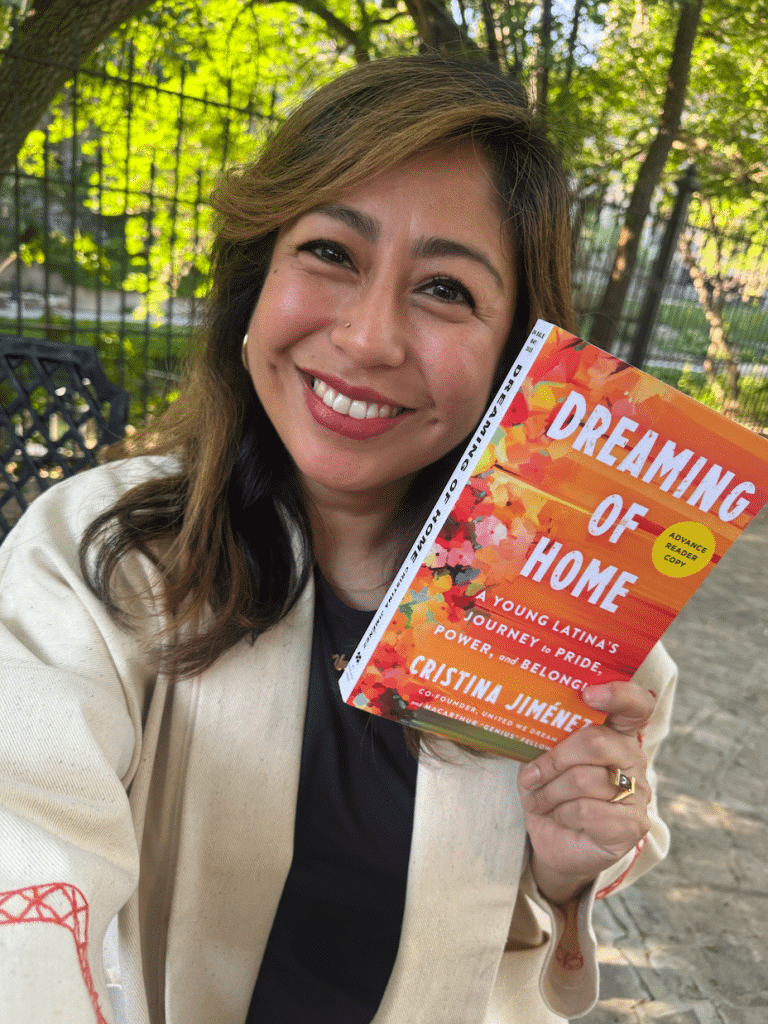
Latino readers will relate to how the book honors family sacrifice without romanticizing it, acknowledges structural injustice without dwelling on it, and addresses the internal conflicts many face: shame, anger, gratitude, and fear. The true power of this memoir lies in its invitation to readers, especially young Latinos who have been told to wait their turn or silence their voices, to view themselves not as problems to be solved but as protagonists in the remaking of a country.
In a moment where immigrant communities are under renewed attack and the rhetoric of exclusion grows louder, Jiménez’s memoir feels like a timely reminder that the fight for dignity isn’t about inclusion into broken systems, but about transforming those broken systems altogether.
For Latino readers, “Dreaming of Home” names the trauma many have lived through but been asked to forget. It rejects the false comfort of assimilation and instead offers a different kind of hope built on solidarity, strategy, and the belief that Latinos can create an America not just where they are included, but where they lead.
Author

Related Articles
Change Is Not Punishment: What Sacred Lessons Teaches Men About Freedom
Men are taught to stay hard and unshaken, but what happens when the weight of that becomes too heavy to carry?

Can Walls Become Bridges? The Quiet Power of “The Border Between Us”
In this book review, Ysabella Osses dives into Rudy Ruiz’s latest work, “The Border Between Us,” a powerful novel that explores what it means to grow up caught between worlds.

These 5 Latine Reads Will Stay With You Long After the Last Page
Guest literature contributor and book lover Ysabella Muñoz Osses curated a list of powerful reads by Latine authors that remind us that our stories are as fierce and enduring as we are.