
Due Process in Peril: How the Debate on Criminality is Opening the Door to a Constitutional Crisis
In recent weeks, two alarming cases have highlighted growing concerns about due process violations in U.S. immigration enforcement. A U.S. citizen was detained on immigration charges in Florida, while a Maryland resident was wrongfully deported to El Salvador despite court protections, raising fundamental questions about constitutional rights and the rule of law.
The Detention of a U.S. Citizen
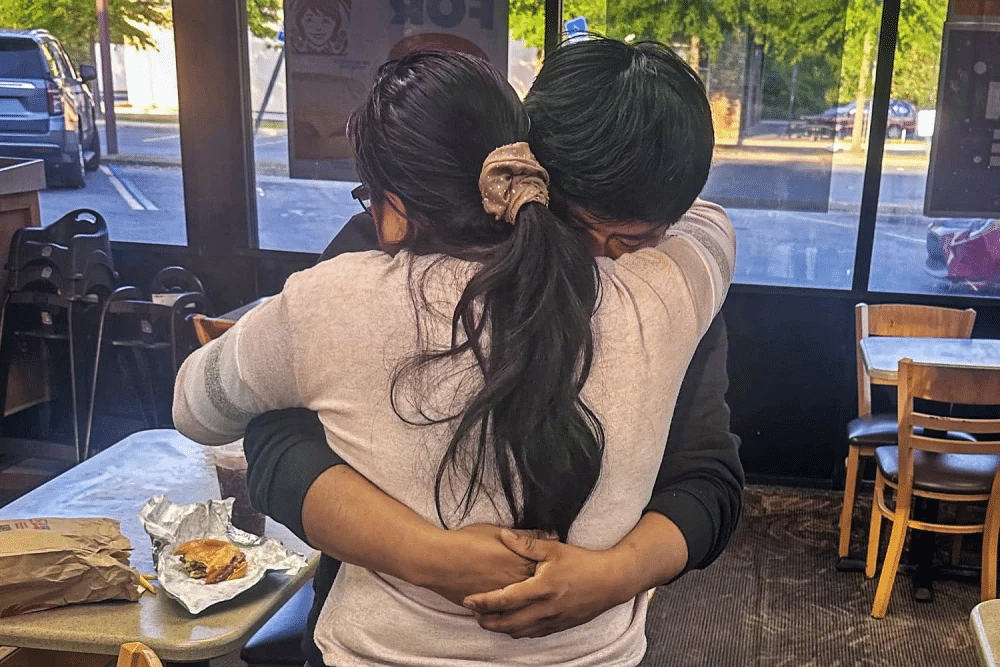
Juan Carlos Lopez-Gomez, a 20-year-old U.S. citizen born in Georgia, was detained by the Florida Highway Patrol on April 16, 2025, during a routine traffic stop. Despite providing documentation to the arresting police officer that proved his legal status in the U.S.—specifically, his Georgia state ID and Social Security card—the officer ignored the documents and arrested Lopez-Gomez on suspicion of being an “unauthorized alien” under a new Florida statute—whichwas temporarily suspended at the time—that criminalizes the entry of undocumented individuals into the state of Florida.
Lopez-Gomez, who speaks limited English and primarily communicates in Tzzil, a Mayan dialect, had recently returned to the U.S. after living in Mexico since he was one year old. During a court hearing, a state judge confirmed the authenticity of his birth certificate but claimed she lacked the authority to release him due to a U.S. Immigration and Customs Enforcement (ICE) hold that requested he be held for an additional 48 hours. He was eventually released late Thursday, April 17.
“I felt bad in there. They didn’t give us anything to eat all day yesterday,” Lopez-Gomez told the Florida Phoenix, which first reported his arrest and release. Lopez-Gomez’s case adds credibility to the widespread and vocal criticism of President Trump’s new immigration policies regarding their potential to lead to racial profiling and violations of due process and other constitutional rights.
The Wrongful Deportation Crisis and the Debate on “Criminal” Status
In another troubling case, Kilmar Abrego Garcia, a Salvadoran native living in Maryland, was deported to El Salvador on March 15, just three days after being arrested on March 12, 2025, despite a 2019 court order protecting him from deportation.
In a twist of fate, Garcia’s whereabouts were discovered by his wife, Jennifer Vasquez Sura, who recognized him in photographs and videos released by Salvadoran authorities showing detainees being unloaded from planes and taken into the CECOT mega-prison. She identified him by his tattoos. His wife is a U.S. citizen, and he has a 5-year-old child, as well as two stepchildren.
In a court hearing, the Trump administration acknowledged that Abrego Garcia’s deportation was an “administrative error” but refused to facilitate his return, claiming he has MS-13 gang ties – an allegation his attorneys and family vigorously dispute.

On April 17, the U.S. Court of Appeals for the 4th Circuit rejected the administration’s appeal, stating that the government was “asserting a right to stash away residents of this country in foreign prisons without the semblance of due process that is the foundation of our constitutional order.” The 4th Circuit decision addressed the Trump administration’s continuing challenge to the Supreme Court’s order, which upheld the District court’s order requiring the government to “facilitate” Garcia’s release from custody in El Salvador and ensure his case is handled as if he had not been deported.
Constitutional Rights and Due Process
These cases highlight a critical and long-standing legal reality: constitutional protections extend to everyone in the United States, regardless of immigration status. The 14th Amendment refers to “persons,” not just “citizens,” when guaranteeing equal protection and due process.
“A permanent resident or a non-permanent resident, like someone on an H-1B visa or another type of temporary visa, is entitled to due process rights,” explains David Leopold, former president and general counsel of the American Immigration Lawyers Association. He explained further, “Everybody’s protected by the United States Constitution inside the United States.”
Due process is a foundational principle in the U.S. Constitution that protects individuals from arbitrary government actions. It requires the government to follow fair procedures and respect certain fundamental rights before depriving any person of life, liberty, or property. The Due Process Clauses are found in both the Fifth Amendment, which applies to the federal government, and the Fourteenth Amendment, which applies to state and local governments. For example, in court proceedings where a person accused of a crime is jailed, that individual is entitled to notice of the action or charges, an opportunity to be heard- such as a hearing- and a decision by a neutral, impartial decision-maker.
The Supreme Court has consistently held that the Due Process Clauses protect “any person,” ensuring fair treatment for everyone under U.S. jurisdiction.
Being Undocumented Is Not a Crime
The Trump administration continues to put forth ferocious assertions that Kilmar Abrego Garcia is a gang member affiliated with MS-13, despite a lack of concrete evidence and no criminal convictions against him. They have even chosen to intensify these unfounded claims as public outcry and legal scrutiny over his wrongful deportation continue to grow. The government, known for spreading inaccurate information through official channels like the Press Secretary and other high-ranking cabinet members, benefits from the public debate regarding Garcia’s guilt or innocence in relation to his alleged gang affiliation and his legal, though not permanent, immigration status.
Former advisor Steve Bannon’s “flood the zone with shit” tactic—overwhelming the public with disinformation to obscure accountability—has been openly acknowledged as a governing strategy. This approach normalizes falsehoods by saturating media cycles, which also detracts from more deeply troubling violations of constitutional rights. While the public debates Garcia’s innocence, which really shouldn’t be called into question in the first place given the lack of evidence, the public is also largely unaware that contrary to common misconceptions, being present in the U.S. without documentation is not a crime in itself. While certain methods of entry may be federal crimes, simply being undocumented is a civil violation, not a criminal one.
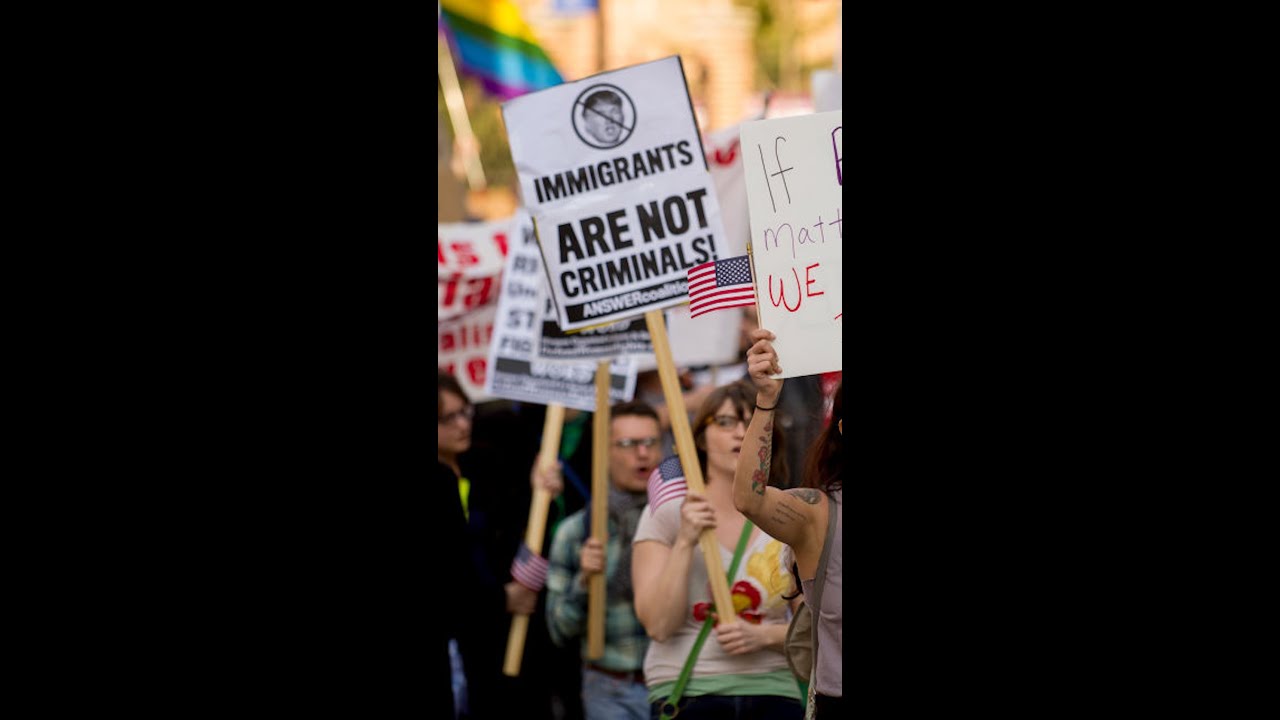
“The act of being present in the United States in violation of the immigration laws is not, standing alone, a crime,” states an ACLU issue brief. In fact, approximately 45% of undocumented immigrants did not enter illegally but instead overstayed visas or violated other conditions of legal entry.
The term “illegal alien” is not found in the Immigration and Nationality Act, and undocumented immigrants who have not been convicted of crimes are not considered “criminal aliens” under immigration laws. However, it serves the Trump administration’s aggressive immigration policies well if the general public believes that every single undocumented person is a “criminal.”
Racial Profiling and Community Impacts
Extensive research and government investigations have documented that racial profiling is widespread in the enforcement of U.S. immigration law. The evidence comes from academic studies, civil rights organizations, investigative journalism, and official government reports. The Department of Justice found a “pattern and practice” of profiling Latinos in Arizona and North Carolina, who were up to ten times more likely to be stopped by law enforcement.
In the Center for American Progress report, “Trump’s Rash Immigration Actions Place Cruelty and Spectacle Above Security,” a methodical dissection of Trump’s immigration policies demonstrates how the administration’s immigration actions have caused widespread harm—ripping apart families, undermining public safety, draining economic resources, eroding trust in law enforcement, and jeopardizing both national security and the nation’s humanitarian values.
What’s at Stake for All Americans
When due process protections erode for some, they weaken for all. The Trump administration’s emphasis on mass deportation over prioritizing genuine threats redirects resources away from combating serious crimes like drug trafficking and gun violence.
“The administration is claiming the authority to detain residents of this nation in foreign jails without the due process that underpins our constitutional framework,” the 4th Circuit judges wrote in their Abrego Garcia ruling. Such actions “should be alarming not just to the judiciary, but also to the fundamental sense of freedom that many Americans, distanced from the legal system, continue to cherish.”
As the Trump administration effectively keeps the general public distracted with red herrings and cries of “look, squirrel!,” the severity and swiftness with which the rights of people in the U.S. are being eroded before their very eyes is startling. When a U.S. citizen is unlawfully detained despite evidence proving they are being wrongfully held, or when a person with legal immigration status is whisked off to a foreign mega-prison within three days of being arrested, these cases represent more than just individual injustices – they signal a potential unraveling of core constitutional protections that have defined American justice for generations.
A “criminal” label shouldn’t be the main point of national conversation. The main point of conversation should be why the Trump administration is being allowed to violate basic constitutional rights and ignore U.S. Supreme Court orders with impunity. It’s not a question of if another U.S. citizen, legally residing immigrant, or non-criminal undocumented person is deported in violation of their constitutional rights, but rather a question of when.
Author

Related Articles

Understanding the Chaos: Inside the 2025 Immigration Enforcement Surge
With immigration arrests surging in 2025, confusion about law enforcement actions and what’s permissible is at an all-time high. We help clear the air.

The Latina-Led Women’s March That Confronted Fascism in 1937: A Lost Chapter of U.S. History
In 1937, 5,000 women marched through Tampa’s Ybor City to confront fascism in what would become one of the largest political demonstrations led by Latinas in U.S. history. Yet, few know about it.
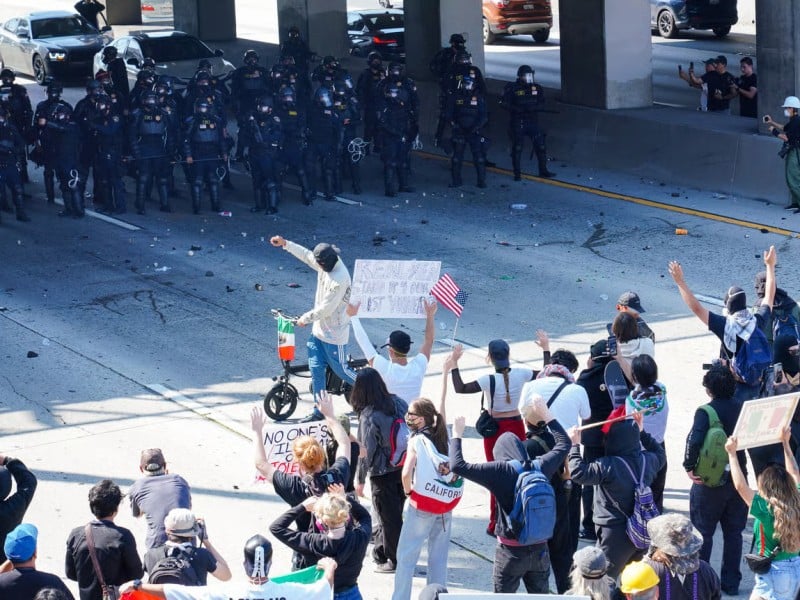
Smartphones are once again setting the agenda for justice as the Latino community documents ICE actions
In this article from The Conversation, Allissa V. Richardson explores the power of smartphone witnessing and Latino mobile journalists against state violence.