“Freedom” Doesn’t Feel or Look Like I Thought It Would
Second installment in the “Voices of Venezuela” essay collection: Describing the current situation in Venezuela is incredibly complex. There is no single reality; there are many, as many as there are personal stories.
Editorial Note: The author’s identity has been verified by our editorial team. Due to ongoing local safety concerns, we are publishing the author under a pseudonym.
Describing the current situation in Venezuela is incredibly complex. There is no single reality; there are many, as many as there are personal stories. Many of us see Venezuela as a toxic relationship. It hurts you, yet you always want to find your way back.
After countless years of struggle, and believing there was no way out of a situation rejected by the majority but sustained by a few through violence and control, many Venezuelans resigned ourselves to defeat. We chose what seemed like the only option left: to try to build a life by accepting limitations and conditions that would never change, simply to survive and gain a small sense of peace.
July 28, 2024, changed everything. With elections clearly won by the opposition, this time backed by undeniable proof, Venezuelans both inside and outside the country began to imagine a way out we had long abandoned. Still, nothing happened right away. Tension continued to build until August 2025, when we saw a real intention to support change for the first time. Uncertainty and anxiety returned, but so did hope.
Finally, someone heard us and decided to act.
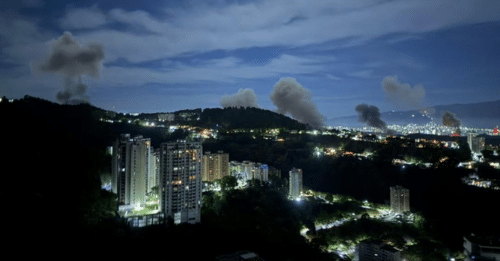
In the early hours of January 3, 2026, I finally found answers to the questions I had been asking myself for years. What would the day freedom arrived look like? What would the sky sound like? Who would I be with? What day would it be? All my assumptions were wrong, and for the first time, I understood what it felt like to experience fear, overwhelming emotion, and hope all at once.
In Venezuela, we still do not quite know how to feel. Those abroad are celebrating as if it is all over. Those of us still here know this is, without question, a massive first step. Not only because of the outcome, or because Nicolás Maduro was removed, but because a promise was finally kept. Even so, we know the road ahead is long.
We understand that the problem was never just one person. It is a network of people, some more ruthless than others, and many of them remain in power. Venezuelans still in Venezuela know we are not free yet. Because of that, we cannot celebrate, even if deep down we feel immense relief and joy over what has happened.
The days that followed feel strange. They are not what we imagined after so many years. There are no parties, no music, no celebrations. There are no flags in windows. We are not in the streets hugging one another in disbelief.
We know that those still in power have no real enemies left to fight, and even if they did, they lack the capacity to do so. Yet they can still oppress the innocent. They are still stronger than we are. But we have learned. We have learned the value of prudence, and that sometimes it is better for our resistance to be mistaken for submission.
There is a heavy silence, as if we do not want them to know we are still here. There is doubt and uncertainty. We do not know if what happened is good or bad, or whether this is the end or just the beginning of the end. What we do have is calm, civility, and clear priorities. We know the essentials matter most: food, medicine, and fuel.
We still cannot quite understand how, in the midst of all this uncertainty, most of the city continues to have electricity, water, internet, and phone service. It feels so unusual that it almost seems as though the transition to a better Venezuela has already begun. We wonder why there is no chaos in the streets. Why there is no price gouging. Why we can still pay in bolívares instead of being forced to use dollars. Could it be that they did not just take Maduro, but also took viveza criolla, that culture of dishonest opportunism, with him?
The expectation of change has never left us. The first step is understanding that freedom comes at a cost, and we are willing to pay it. We do so willingly because we know exactly what we want for Venezuela: independent branches of government, justice, institutions that function, economic stability, the restoration of democracy, and above all, moral integrity.
We have spent years thinking about it, dreaming of it, and waiting for the moment to help rebuild our country. We know it will not be easy or fast. We have the resources. What was missing was the will to act. And now, that may finally be the easiest thing to find.
Andreina V. Caracas, Venezuela.
Find the next essay in the “Voices of Venezuela” collection here.
Related Articles
Venezuelans are full of envy. But not in the way you might think. Let me explain.
Final installment in the “Voices of Venezuela” essay collection: January 3 marked a new chapter, one in which the world finally turned its attention to Venezuela. Violently, as our rulers have always imagined.
Between Joy and Fear
Fourth installment in the “Voices of Venezuela” essay collection: We were all expecting the events that had been announced, but we never imagined they would unfold so quickly.
The Day Venezuela’s Future Became Even More Uncertain
Third installment in the “Voices of Venezuela” essay collection: “Only a few days into 2026 and the future already feels uncertain,” is what my short journal entry reads for January 03, 2026, the day the U.S. launched an illegal military operation in Venezuela.