
Juneteenth: The Nuance of Latino Privilege and Common Struggle
We explore how Juneteenth can inspire much-needed introspection in the Latino community about the role that privilege and shared struggle play in the continued fight for full equality in the U.S for Black Americans.
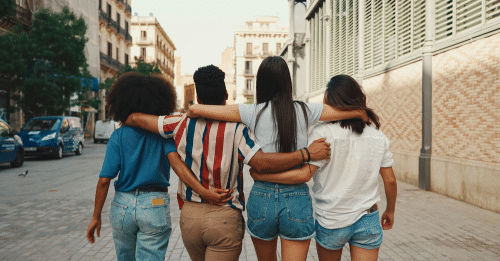
Every June 19th, Juneteenth fills our timelines with celebration and education. It marks the day in 1865 when Union troops arrived in Galveston, Texas, to announce the end of slavery, more than two years after the Emancipation Proclamation. While it’s a distinctly Black American story, it’s also a deeply American one.
For many Latinos in the U.S., it’s easy to wonder how to be purposeful with the day, especially if the topic was glossed over or, even worse, erased in school curricula.. However, it can serve as an opportunity to acknowledge our shared histories, confront anti-Blackness within our communities, examine our role in the ongoing fight for racial justice, and consider how to be better allies. Black and Afro-Latino communities.
Our Shared Histories: Slavery, Struggle, and Survival
The histories of Latinos and Black Americans are more intertwined than many realize. Slavery wasn’t unique to the U.S.; it was a brutal reality throughout Latin America, with countries like Brazil, Cuba, and the Dominican Republic maintaining the transatlantic slave trade well after it was abolished in the U.S. In fact, Brazil was the last country in the Americas to abolish slavery, in 1888. Millions of Afro-Latinos are descendants of this legacy.
This legacy has shaped the demographics and cultures of Latin America, where Afro-descendants make up a significant portion of the population, about 133 million people, or roughly 25% of the region’s total population, according to a 2023 World Bank Group report. In the U.S., Afro-Latinos make up “about 2% of the U.S. adult population and 12% of the adult Latino population,” according to the Pew Research Center.
These Afro-Latino communities have contributed immensely to the cultural, economic, and social fabric of Latino culture, but they’ve faced persistent discrimination and marginalization. This struggle isn’t confined to Latin America. In the U.S., Afro-Latinos often encounter a double bind: anti-Black racism from wider society and, at times, exclusion or erasure within Latino communities themselves. The fight for racial justice, civil rights, and freedom in the U.S. is shared between Black and Latino communities, with Afro-Latinos at the direct intersection of both.
Anti-Blackness: A Reality the Latino Community Must Confront
Solidarity can’t exist without truth. Anti-Blackness and colorism are persistent realities within Latino communities, rooted in the colonial history of the Americas. Spanish and Portuguese colonizers established a racial caste system that privileged whiteness and European features while devaluing African and Indigenous ancestry. These hierarchies were reinforced over centuries and have left a lasting imprint on Latino cultures. The echoes of this colonial legacy are still present to this day. Many of us have heard relatives joke about “mejorar la raza” (“improve the race” by marrying or having kids with someone who has lighter skin or more “European” features) or make comments about “pelo malo,” skin tone, and more.
Ignoring or denying the existence of, or downplaying the severity of, anti-Blackness within Latino culture contributes to the erasure of the Afro-Latino influence, which is a fundamental part of Latino culture. Afro-Latinos have shaped our history, music, language, food, art, sports, and spirituality, and they’ve been at the forefront of struggles for freedom, civil rights, and social justice. From maroon societies (quilombos)—settlements of escaped enslaved people who resisted colonial rule—to contemporary activism. Yet, too often, their contributions are erased or sidelined.
Recognizing that and addressing anti-Blackness within our communities accomplishes two things: it sets the historical record straight and challenges the biases that still shape our communities today.
The Power of Solidarity
In recent years, social tensions have driven wedges between Latino and Black communities in the U.S., yet both communities face over-policing, discrimination in healthcare, wage disparities, and systemic racism. The impact of these disparities isn’t equal, of course, but the purpose of these conversations is to better understand the nuances that keep both communities oppressed centuries after colonization fundamentally altered and destroyed their original existence. The struggles are interconnected, and so are the futures of both communities.
History also shows that Black/Brown solidarity has produced powerful moments of progress. During the Civil Rights Movement, for example, Dr. Martin Luther King Jr. worked closely with Latino leaders like César Chávez and Dolores Huerta. The 1968 Memphis sanitation workers’ strike, which King supported, included both Black and Latino workers. Latino and Black activists have stood together for farmworkers’ rights, voting rights, and fair housing. These communities have a long tradition of solidarity and have proven that it leads to tangible victories for both communities.
Resistance: Privilege and Shared Struggle
The beauty of Juneteenth is that it’s a reminder of what’s possible. Freedom has often been delayed, but it wasn’t entirely denied. When Latinos show up for Black lives, it’s a demonstration that communities can and should join the fight against injustice and oppression, whether the problems affect them directly or not. In many ways, some Latinos enjoy privileges and access that the Black community does not have, which provides even more ways in which the Latino community can help in the fight for equality.
There are many reasons to actively participate in cross-community solidarity, and Juneteenth presents a powerful invitation to further explore the intricate nuances of history, struggle, and success that the Black and Latino communities will always share in common.
Author

Related Articles

Remembering Abraham Quintanilla, Selena’s Father & Patriarch of Tejano Music
Abraham Isaac Quintanilla Jr., the patriarch behind one of the most enduring legacies in Latin music history and the father of the late Tejano superstar Selena Quintanilla, died on December 13, 2025, in Corpus Christi, Texas. He was 86.

10 Latino Myths to Get Spooked This Halloween
Even if you don’t totally buy into the supernatural, you have to admit—nothing beats the thrill of a good old-fashioned scary story.
September’s Latino Independence Days: A Month of Freedom
Across Latin America, September is a time of freedom, pride, and remembrance. This month marks the independence of many nations, each with its own powerful story of struggle, resilience, and celebration.