
How Latin American Feminists Sparked a Global Women’s Health Movement
Before global institutions paid attention to women’s health, it was grassroots organizers in Latin America who sounded the alarm on maternal mortality, reproductive rights, and systemic health injustice, leading to the International Day of Action for Women’s Health.

Every year on May 28, the International Day of Action for Women’s Health rallies global efforts to advance sexual and reproductive rights. But few know this day, and the movement it represents, originated not in the halls of the United Nations or Western institutions, but through the fierce grassroots activism of Latin American feminists. Their pioneering work in the 1980s laid the foundation for today’s global advocacy, challenging systemic inequities and centering marginalized voices in the fight for women’s health justice.
The Birth of a Movement: Costa Rica, 1987
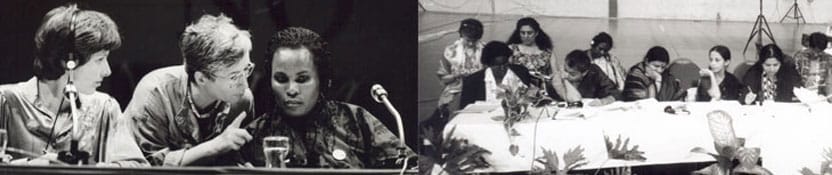
In 1987, during the International Women’s Health Meeting in Costa Rica, the Latin American and Caribbean Women’s Health Network (LACWHN) proposed designating May 28 as a day to demand accountability for women’s health. Frustrated by the exclusion of women’s lived experiences from policymaking, activists sought to shift the narrative from charity to rights. As the main network for the region, LACWHN took charge of organizing and advancing actions across Latin America and the Caribbean. Meanwhile, the Women’s Global Network for Reproductive Rights (WGNRR) was entrusted with leading the campaign on a global scale. Both organizations worked closely with a core group of dedicated members to ensure effective coordination and momentum.
The first campaign focused on maternal mortality, a crisis disproportionately affecting poor and rural women in the Global South. This was no symbolic gesture. LACWHN’s Call to Action exposed how structural violence, including poverty, lack of education, and inadequate healthcare, fueled preventable deaths. By mobilizing grassroots groups to collect data and share stories, they forced institutions like the World Bank and the World Health Organization to acknowledge these systemic failures. Crucially, they framed maternal health not as a technical issue, but as a matter of gender justice and human rights.
Grassroots Power in the Global South
LACWHN’s strategy centered on empowering local communities. They distributed accessible information about reproductive health through workshops and pamphlets, bypassing gatekeepers who had long hoarded medical knowledge. This democratization of information allowed women to advocate for themselves in clinics, schools, and legislatures.
The network also linked local struggles to global campaigns. For example, during the 1990s, they highlighted how international trade agreements undermined public health systems, leaving poor women without access to care. Later, they championed access to safe abortion amid rising religious fundamentalism, as seen in Argentina’s Green Wave movement and recent victories in Mexico and Colombia.

From Regional to Global: Building Solidarity
The Women’s Global Network for Reproductive Rights (WGNRR) amplified LACWHN’s work globally, turning May 28 into a platform for intersectional advocacy. Over the decades, the day’s themes expanded to include:
- Violence against women as a public health emergency
- Young people’s sexual and reproductive rights
- HIV/AIDS and its gendered impacts
- Economic justice and the feminization of poverty
This approach rejected narrow, medicalized views of health. Instead, it connected issues like abortion access to broader struggles against colonialism, racism, and economic exploitation, a framework that’s now central to the reproductive justice movement.
Legacy in Action: Pandemic Resistance and Beyond
Latin American feminists continue leading global advocacy. During COVID-19, when governments deprioritized reproductive care, groups like Miles Chile and Colombia’s Mesa por la Vida organized telemedicine abortions and emergency contraception deliveries. Their efforts preserved access in the face of lockdowns and supply shortages, proving the resilience of grassroots networks.
Today, their legacy lives on in movements demanding the decriminalization of abortion in restrictive regions, accountability for obstetric violence in healthcare systems, and protection of Indigenous midwives and traditional practices.
A Blueprint for Global Health Justice
The International Day of Action for Women’s Health serves as a public reminder that transformative change often starts at the margins. By centering the expertise of those most impacted, poor women, Indigenous communities, and LGBTQ+ people, Latin American feminists modeled a radical, inclusive vision of health advocacy. Their work challenges the public to ask: Who defines what “health” means?
As anti-rights movements grow worldwide, their blueprint, which is rooted in solidarity, grassroots power, and unapologetic demands for autonomy, remains essential. The fight for women’s health isn’t just about medicine, it’s about dismantling the systems that decide whose lives matter. “We don’t just want to survive, we want to thrive,” declares a LACWHN manifesto. Every day, that demand echoes across borders.
Author

Related Articles
Latinos and the U.S. Economy: Deportations Threaten a $4.1 Trillion Powerhouse
Latinos are driving a powerful economic engine that keeps the U.S. moving forward, but mass deportations are putting that progress at risk.
Latino Heritage Month: 30 Micro-Actions to Make a Big Impact
Latino Heritage Month, observed from September 15 to October 15, is a celebration that can be turned into impact through small yet intentional, everyday choices.

9/11 Changed Everything and Its Echoes Are Louder Under Trump’s America
The legacy of 9/11 has shaped the way we travel, the surveillance we accept, and the policies we live under. And much of this legacy has been compounded by policy changes under the Trump administration.