New USCIS Policy Expands Social Media Scrutiny of Immigrants and Raises First Amendment Alarms
A major change is underway in U.S. immigration policy: USCIS can now deny green cards, student visas, and other immigration benefits based on an applicant’s public social media activity if it’s deemed supportive of antisemitic terrorism or harassment.
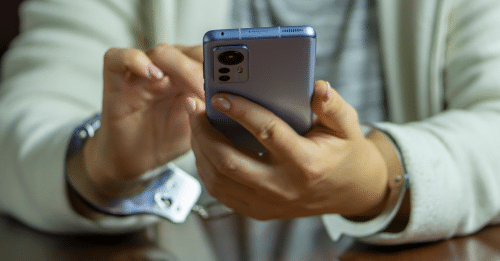
The U.S. Citizenship and Immigration Services (USCIS) announced a sweeping new policy on April 9, 2025, granting immigration officers the authority to deny visas, green cards, and other immigration benefits based on an applicant’s social media activity deemed supportive of antisemitic terrorism or harassment. The announcement marks a significant expansion of discretionary power under federal immigration law and has triggered a wave of legal and civil liberty concerns.
Effective immediately, the policy applies to applicants for lawful permanent residence, foreign students, and individuals affiliated with educational institutions connected to antisemitic activity. According to the USCIS press release, immigration officers will “consider social media content that indicates an alien endorsing, espousing, promoting, or supporting antisemitic terrorism, antisemitic terrorist organizations, or other antisemitic activity as a negative factor in any USCIS discretionary analysis when adjudicating immigration benefit requests.”
USCIS says that the purpose of the policy is to “protect the homeland from extremists and terrorist aliens, including those who support antisemitic terrorism, violent antisemitic ideologies and antisemitic terrorist organizations such as Hamas, Palestinian Islamic Jihad, Hezbollah, or Ansar Allah aka: ‘the Houthis.’” However, it’s not clearly understood how the stated purpose of the policy will be achieved through discretionary use by immigration officers. As reported by AP News, this new policy is expected to affect 3.6 million people.
USCIS Policy Scope and Enforcement
The new USCIS policy uses executive orders issued by President Donald Trump, specifically those addressing antisemitism and national security threats, as the source of their legal authority, despite the constitutionality and functionality of many of Trump’s orders still being under review. The guidance directs USCIS officers to treat social media activity as a “negative factor” in any discretionary immigration benefit analysis.
USCIS’s use of social media in immigration vetting has evolved over several administrations. The practice began under the Obama administration, intensified under the Trump administration, and has now been further formalized. Notably, USCIS created its Social Media Division in 2016 to standardize the monitoring process. In 2019, the U.S. State Department began requiring nearly all visa applicants to disclose their social media handles as part of their applications. This new policy builds on those earlier frameworks but expands the scope by explicitly targeting speech related to antisemitism and affiliations with designated terrorist organizations.
Applicants must now list their social media handles on immigration forms such as the I-485 (green card) and N-400 (naturalization), allowing USCIS to monitor public activity. While private accounts and encrypted messaging apps like WhatsApp and Signal remain largely beyond reach without a warrant, USCIS may consider publicly shared screenshots or leaked content as part of their review. Historical posts, even if deleted, can be retrieved from caches or archives.
The policy has already been linked to visa revocations of student activists, including Mahmoud Khalil and Rumeysa Ozturk, who deny the allegations. Advocacy groups fear a pattern of selective enforcement disproportionately impacting Muslim, Arab, and pro-Palestinian individuals.
Currently, the policy explicitly targets green card applicants and foreign students but doesn’t yet apply to naturalization (citizenship) applications. Requirements like “good moral character” remain unchanged for citizenship, focusing on criminal history and legal compliance. However, this could change. A DHS proposal open for public comment until May 5, 2025, could extend this social media scrutiny to citizenship applicants, potentially creating a double standard where a non-citizen can be penalized for speech that would be protected if made by a U.S. citizen.
Implications for Immigrants
Immigrants must already maintain a high standard to remain in the U.S., including continuous residence, compliance with visa conditions, good moral character, financial self-sufficiency, and medical clearances. The new policy adds a subjective layer of ideological evaluation, further complicating the process.
The USCIS policy raises concerns about due process violations, as applicants may not be informed of specific posts used to justify denials. With the USCIS Ombudsman’s office currently suspended, avenues for appeal are limited. Privacy is also a concern. While federal law allows monitoring of public posts, there are few protections for immigrants against misinterpretation or biased scrutiny.
Legal Experts Weigh In
Constitutional scholars and immigration attorneys have raised alarms about the policy’s vagueness and its potential to infringe upon First Amendment rights. Though non-citizens outside U.S. borders have limited protections, courts have recognized free speech rights for immigrants residing within the U.S., such as in Bridges v. Wixon (1945), a landmark U.S. Supreme Court case that affirmed the constitutional rights of legal permanent residents, particularly regarding due process and free speech.
Some critics warn that the Department of Homeland Security’s proposed expansion of social media screening could have far-reaching consequences for long-term residents and applicants. Newsweek reported that Saira Hussain, senior staff attorney at the Electronic Frontier Foundation, stated:
“These are people who could have been residing in the U.S. for 30, 40 years, as a Green Card holder who are seeking citizenship, or people who are residing on other types of visas who are seeking a Green Card. It really creates a massive chilling effect about people who could be vetted for their online speech who have every right to be here in this country and could be chilled from sharing their opinions because they are concerned they are going to be vetted and denied immigration benefits such as naturalization.”
Policy experts also warn that the administration’s expansive approach to monitoring immigrants’ online speech raises serious constitutional and civil liberties concerns. As the Center for Democracy & Technology notes in a recent article analyzing the policy and its implications: “The current Administration’s broad definitions of speech that could lead to visa revocation or application denial, and the questionable constitutionality of making immigration decisions based on viewpoint, raise concerns that will only be exacerbated by the use of flawed, error-prone social media monitoring technologies.”
Rachel Levinson-Waldman, managing director of the Brennan Center’s Liberty and National Security Program at New York University, shared with AP News: “It’s by and large established that people in the U.S. have First Amendment rights. […] And obviously, there are complicated ways that that plays out. There is also fairly broad authority for the government to do something like revoking somebody’s visa, if you’re not a citizen, then there’s steps that the government can take — but by and large, with very narrow exceptions, that cannot be on the grounds of speech that would be protected.”
Uncertainty Ahead
The USCIS policy on antisemitism-linked social media activity underscores a broader shift toward ideological vetting in immigration enforcement. While framed as a national security measure, the policy’s ambiguities and broad discretionary power raise substantial legal and ethical questions.
Internationally, countries like Canada and several European nations have implemented limited forms of social media screening, typically focused on national security threats. However, few have policies as sweeping or as ideologically specific as the current U.S. approach.
As challenges loom, courts will be asked to reconcile national security interests with foundational principles of free speech, due process, and equal treatment. In the meantime, immigrant communities face heightened uncertainty over how online expression could impact their ability to live, study, or work in the United States.
Author

Related Articles
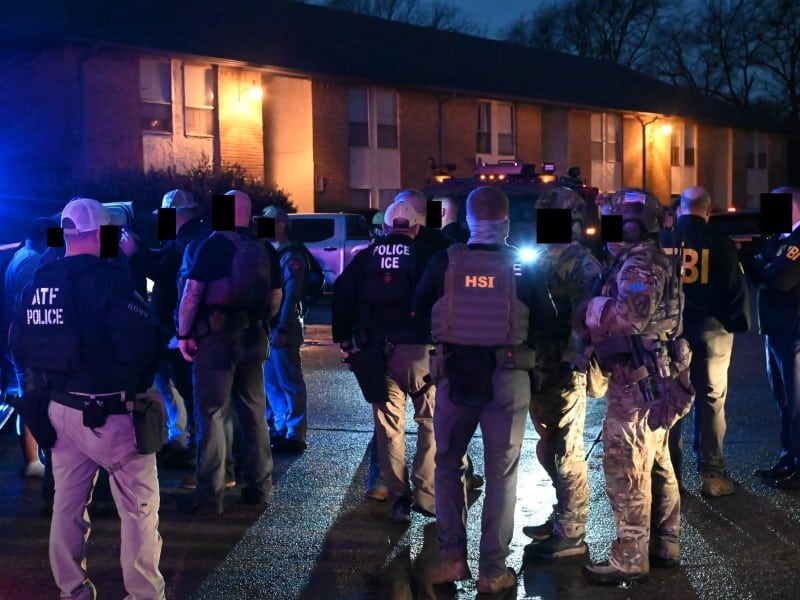
Understanding the Chaos: Inside the 2025 Immigration Enforcement Surge
With immigration arrests surging in 2025, confusion about law enforcement actions and what’s permissible is at an all-time high. We help clear the air.

The Latina-Led Women’s March That Confronted Fascism in 1937: A Lost Chapter of U.S. History
In 1937, 5,000 women marched through Tampa’s Ybor City to confront fascism in what would become one of the largest political demonstrations led by Latinas in U.S. history. Yet, few know about it.
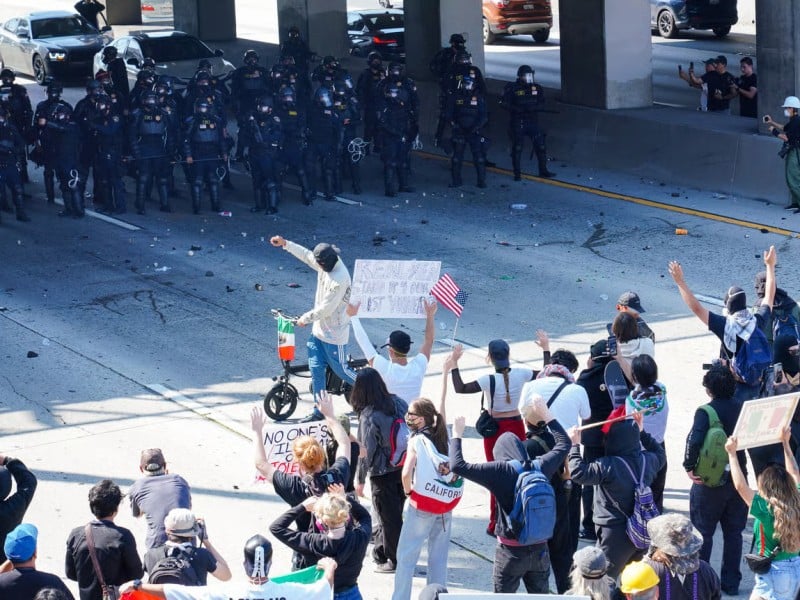
Smartphones are once again setting the agenda for justice as the Latino community documents ICE actions
In this article from The Conversation, Allissa V. Richardson explores the power of smartphone witnessing and Latino mobile journalists against state violence.