
“Real Women Have Curves” Is Closing on Broadway—Here’s Why You Need to See It
“Real Women Have Curves: The Musical” brought immigration, identity, and ambition to Broadway with a story that’s as timely as it is powerful.
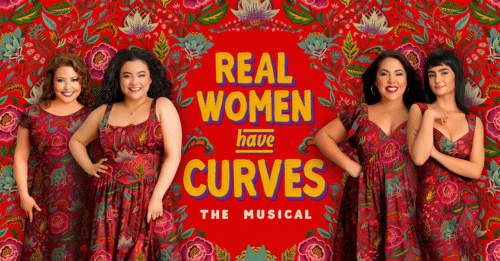
Broadway hasn’t always made space for stories like “Real Women Have Curves: The Musical,” but in doing so, it gives audiences a mirror reflecting the hopes, struggles, and dreams of millions of Latinos in the U.S. This bold musical brought the complexities of immigration, identity, and ambition to center stage, all rooted in cultura. And while its Broadway run is set to end on June 29 (with hopes for an extension), its impact on Latino representation is undeniable.
This adaptation of Chicana playwright Josefina López’s seminal 1990 play, which inspired the beloved 2002 film starring America Ferrera, made its Broadway debut at the James Earl Jones Theatre on April 27, 2025, after having its first preview on April 1, 2025. The musical is set in 1987 East Los Angeles and follows Ana García, a Mexican-American teenager navigating the push-and-pull of her immigrant family’s expectations and her own aspirations to leave home and attend Columbia University. It’s a story that pulses with heart, humor, and an urgent emotional truth: for many first-generation Latinos, the American Dream comes with the unspoken cost of guilt, sacrifice, and separation.
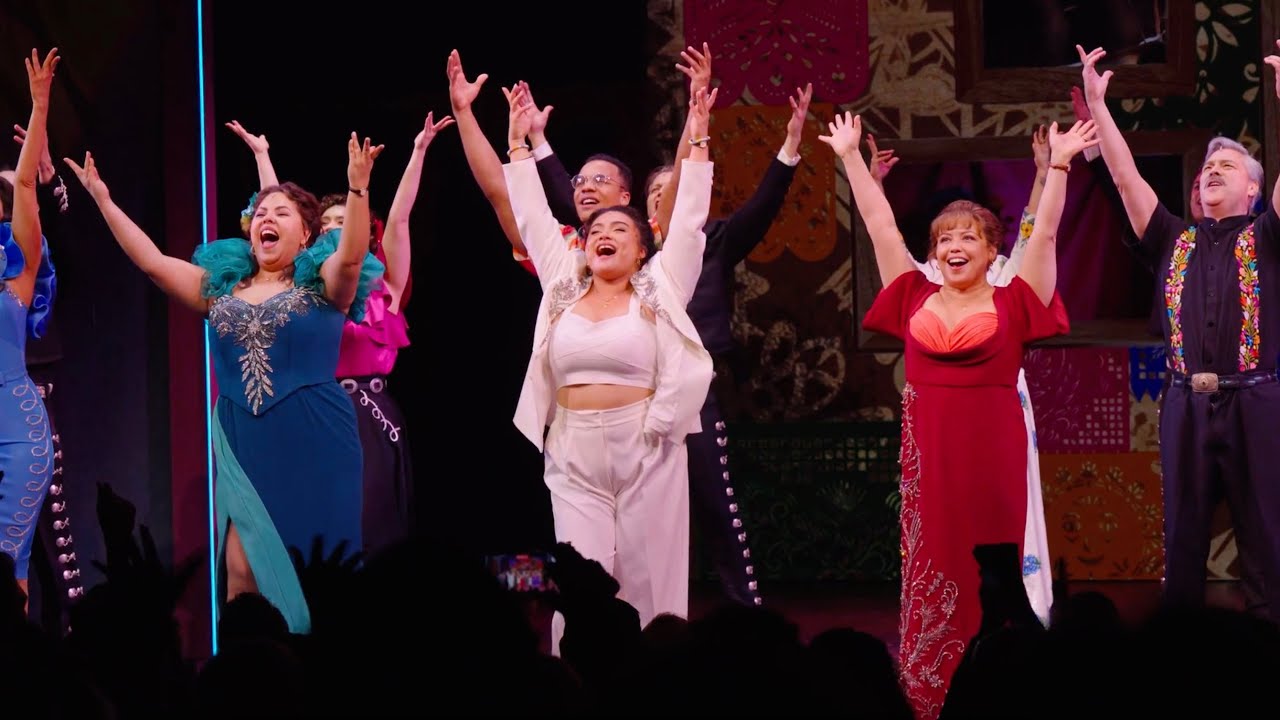
That intergenerational tension is made more poignant by the show’s setting: a sewing factory staffed by undocumented Latina workers. It’s a backdrop that echoes present-day realities, especially as immigration raids and enforcement actions make headlines in cities like Los Angeles. When Ana’s coworker, Itzel, is deported after a raid next door, the stakes are no longer just about college applications; they’re also about survival, belonging, and the impossible choices so many immigrant families are forced to make.
A Timely Story, Closing Too Soon
Though “Real Women Have Curves” was years in the making, developed over five years by producers Barry Weissler, Fran Weissler, and Jack Noseworthy, it arrived on Broadway at a moment when immigrant rights were once again under national scrutiny. In a statement, the producers called the show a “joyful immigrant story that explores the American Dream,” and emphasized the responsibility they felt in telling it. They also stated that, “Though our run on Broadway is coming to an end, we are very much looking forward to the future life of Real Women Have Curves and continuing to bring this important story to new audiences.”
With music and lyrics by Mexican Joy Huerta (of pop duo Jesse & Joy) and Benjamin Velez, and a book by Lisa Loomer and Nell Benjamin, the show featured choreography and direction by Tony winner Colombian Sergio Trujillo for his work on “Ain’t Too Proud.” The cast was led by Tatianna Córdoba, of Puerto Rican and Filipino descent, in her Broadway debut as Ana, alongside Justina Machado, of Puerto Rican descent, whose portrayal of Ana’s mother Carmen earned her a Tony nomination for Best Performance by an Actress in a Featured Role in a Musical.
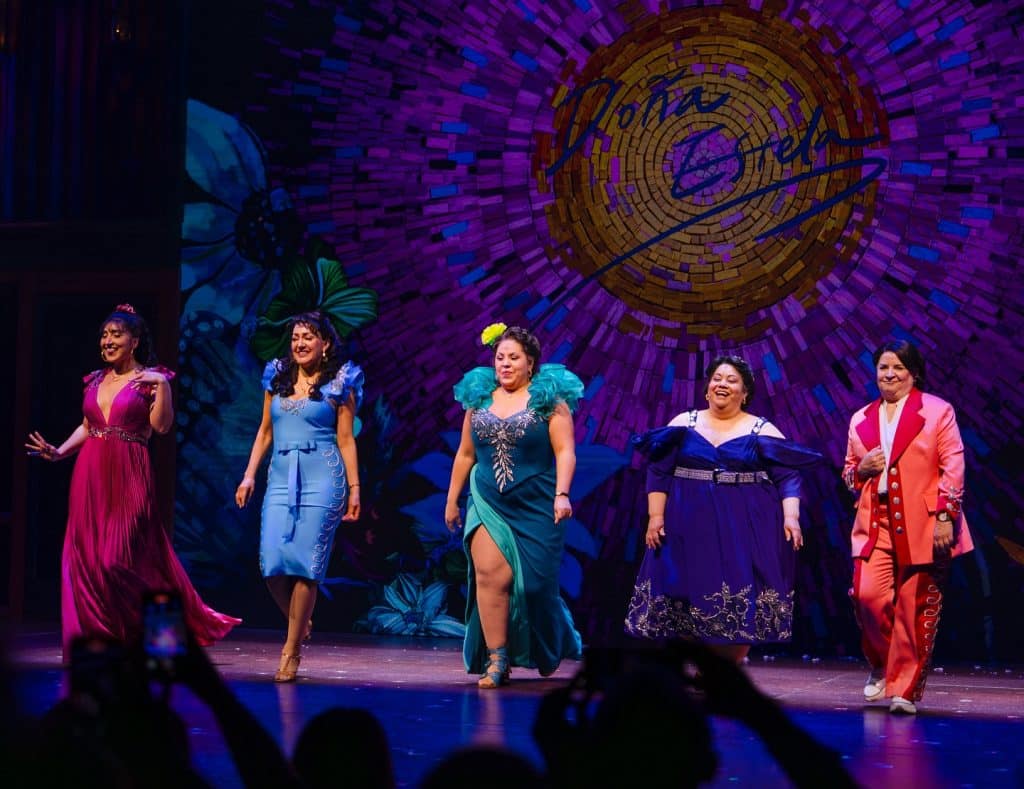
While the show received mostly positive reviews, “Real Women Have Curves” struggled to find its footing at the box office. Despite a performance at the Tony Awards and nominations for Best Original Score and Best Featured Actress, the show didn’t recover from weak ticket sales, reportedly grossing about $400,000 per week, well below its weekly running costs. With a capitalization of up to $16.5 million, the production failed to recoup its investment, leading to an early closing announcement after just 73 regular performances and 31 previews.

Broadway Has a Latino Representation Problem
It’s difficult not to see the premature closure of “Real Women Have Curves” as part of a broader issue: the chronic underrepresentation of Latino stories and creatives on Broadway. While groundbreaking shows like “In the Heights” (2008) and “On Your Feet!” (2015) have made waves in recent decades, they remain exceptions to the rule. As of the 2021–22 Broadway season, only 4.1% of Broadway roles were played by Latine actors, according to a report from the Asian American Performers Action Coalition (AAPAC).
Representation among writers and directors was even lower that season. White writers were responsible for 76.3% of all Broadway plays and musicals, Black writers for 23.7%, and all other ethnic groups, including Latine writers, were “shut out” that season, aside from those identifying as mixed race, who represented 14.3% of writers.
This season marked a rare moment when two Latino-centered musicals, “Real Women Have Curves” and “Buena Vista Social Club,” were running simultaneously, a cultural milestone that showed how powerful and diverse Latino storytelling can be when given the spotlight. But if these shows aren’t supported, their impact risks being short-lived.
Hope for “Real Women Have Curves” on Broadway
While “Real Women Have Curves” is set to close on June 29, there’s still an opportunity for audiences to show up and make enough of an impact to possibly extend the play’s run on Broadway. For Latino audiences, “Real Women Have Curves” offers a chance to see themselves represented in their full complexity and experience a moment of community and joy. For non-Latino audiences, the play is an invitation to witness the immigrant experience through a lens that’s joyful, challenging, and ultimately hopeful.
Go see “Real Women Have Curves” before it closes, not just because it’s relevant and because Latino stories deserve to take up space, but also because it’s a genuinely good production, fueled by passion and raw talent, that has been making audiences laugh, cry, and consider a different perspective since its first preview.
Get tickets here.
Author

Related Articles

Change Is Not Punishment: What Sacred Lessons Teaches Men About Freedom
Men are taught to stay hard and unshaken, but what happens when the weight of that becomes too heavy to carry?
Can Walls Become Bridges? The Quiet Power of “The Border Between Us”
In this book review, Ysabella Osses dives into Rudy Ruiz’s latest work, “The Border Between Us,” a powerful novel that explores what it means to grow up caught between worlds.
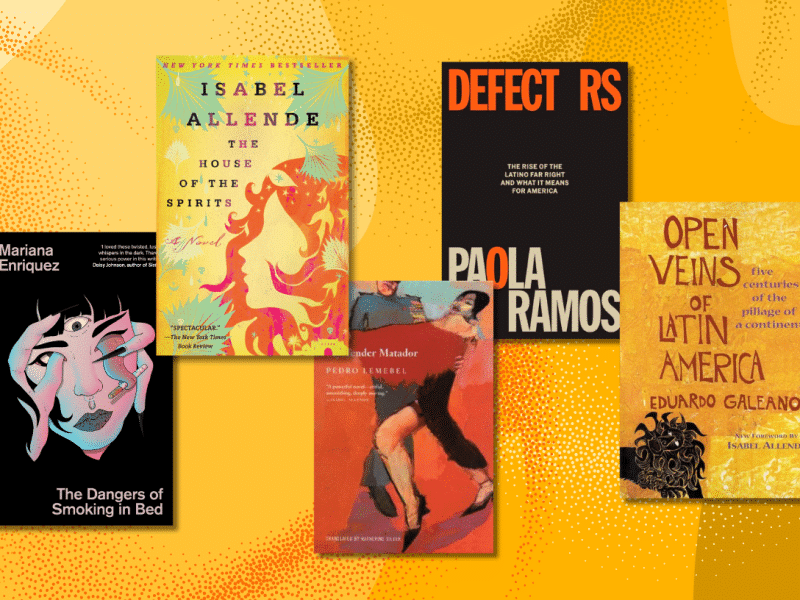
These 5 Latine Reads Will Stay With You Long After the Last Page
Guest literature contributor and book lover Ysabella Muñoz Osses curated a list of powerful reads by Latine authors that remind us that our stories are as fierce and enduring as we are.