
Trump Revoked TPS for Venezuelans, Now What?
On May 19, the Supreme Court upheld the Trump administration’s decision to revoke TPS for Venezuelans who had been granted TPS in 2023, stripping 350,000 people of legal status, work authorization, and protection from deportation in one sweeping move.
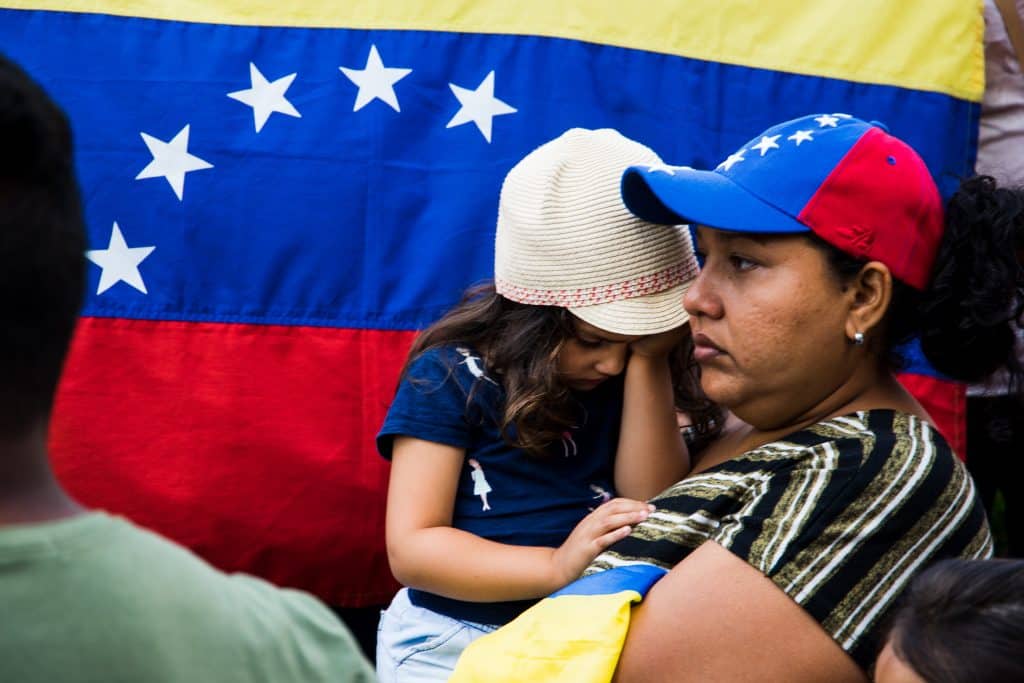
The Supreme Court’s decision this past May 19 to uphold the Trump administration’s revocation of TPS for Venezuelans has created a legal, humanitarian, and moral crisis that is rippling throughout communities in the entire U.S. TPS, which is the acronym for Temporary Protected Status, isn’t a permanent immigration solution. TPS did, however, provide a solution for more than 350,000 Venezuelans—many of whom have built lives, raised families, and contributed to the U.S. economy. That solution is now gone, leaving Venezuelans and immigrant communities in crisis as they try to understand what comes next for them.
What Is TPS and How Are Venezuelans Affected by the Ruling?
According to U.S. Citizenship and Immigration Services (USCIS), the federal agency within the Department of Homeland Security that administers the U.S. immigration system, TPS is a humanitarian protection granted by the Secretary of Homeland Security to nationals of countries in crisis “due to conditions in the country that temporarily prevent the country’s nationals from returning safely, or in certain circumstances, where the country is unable to handle the return of its nationals adequately.” TPS status provides protection from deportation, allows for legal work authorization, and grants limited travel rights. It’s temporary by design and revocable at will.
Venezuelans received TPS for the first time in 2021, during the Biden administration, in response to a severe humanitarian crisis. A failing infrastructure, government oppression, rampant hyperinflation, and the total collapse of healthcare placed millions in critical danger. The U.S. government recognized that deporting Venezuelans who were in the U.S. without proper documentation would expose them to danger, and the 2021 TPS designation was an acknowledgment of this threat. This designation was renewed in 2023.
But in early 2025, citing “improved conditions” in Venezuela and “national interest,” the Trump administration moved to terminate those protections. However, the opposite is true regarding improvements in Venezuela. As of 2025, the country continues to face significant political and humanitarian challenges. While the Trump administration’s decision was challenged in court, on May 19, the Supreme Court cleared the way with an 8-1 ruling to end TPS for 350,000 Venezuelans who had been granted TPS in 2023. Those granted TPS in 2021 won’t be affected because the two designations are legally distinct, so they each have their own eligibility criteria, registration periods, and expiration dates. The 2021 TPS designation remains valid through September 10, 2025. The U.S. government could choose to terminate it earlier, but no announcements have been made about this at the time of this reporting.
Venezuelans who had TPS status granted by the 2023 designation and have no other visa or other immigration protections are now deportable. Employment Authorization Documents (EADs) are tied to TPS, so their jobs are also in jeopardy.TPS holders who are a part of mixed-status families or have U.S. citizen children are also at risk of being separated from their families.
The Bigger Picture: TPS Under Attack
Venezuelans are the latest to go through TPS termination, but they likely won’t be the last. Earlier in 2025, TPS protections were also revoked for Haiti in February 2025, with the designation set to expire on August 3, 2025. That decision affects approximately 500,000 Haitians residing in the U.S. Legal challenges to the termination are underway, but the administration is actively defending the move in federal court.
Legal scholars and immigration advocates have expressed concern over the humanitarian consequences of the decision. While the revocation of TPS for Haitians affects a larger number of people, they have a 6-month transition period, making the impact less abrupt. By contrast, 350,000 Venezuelans were stripped of their legal status and work permits overnight, making it a singular, high-profile action with immediate effect. “This is the largest de-documentation, or loss of legal status, for any group of people in the history of the country,” Emi MacLean, an ACLU of Northern California attorney working on the case, shared with NBC News.
Ahilan Arulanantham, co-director of the Center for Immigration Law and Policy (CILP) at the UCLA School of Law, told UCLA Law, “This is the largest single action stripping any group of non-citizens of immigration status in modern U.S. history. That the Supreme Court authorized it in a two-paragraph order with no reasoning is truly shocking. The humanitarian and economic impact of the Court’s decision will be felt immediately and will reverberate for generations.”
On March 21, TPS was revoked for Afghan nationals and impacted individuals who fled Afghanistan following the 2021 U.S. military withdrawal and subsequent Taliban takeover. The designation is set to expire on July 12, 2025. TPS for Cameroon was also terminated in April 2025, affecting approximately 3,000 individuals.
In addition to these finalized terminations, the Trump administration has signaled a broader intent to reexamine TPS designations for other countries, particularly those that received extensions or redesignations during the Biden administration. Countries currently under review include El Salvador, Honduras, Nepal, Nicaragua, and Sudan. As of late May 2025, no final decisions have been announced for these countries, but internal policy reviews are reportedly ongoing.
What Venezuelan TPS Holders Can Do
With the revocation of TPS status now in effect, individuals who were previously protected must explore their eligibility for other immigration options based on their personal circumstances.
One possible alternative is asylum. Venezuelan nationals who fear persecution based on political views, membership in a particular social group, or other protected grounds may qualify for asylum under U.S. law. Individuals with pending asylum applications should continue to monitor their cases. Others should consult with immigration attorneys to determine whether filing a new claim is appropriate, considering their current situation and the conditions in Venezuela.
Others may be eligible for family-based immigration solutions. U.S. citizens or lawful permanent residents can file petitions on behalf of certain family members, which could ultimately lead to permanent residency. The process typically requires proof of a qualifying relationship and may involve long wait times depending on the visa category and the petitioner’s immigration status.
Employment-based visas offer another potential path, though access is limited and subject to program-specific criteria. Certain employers may sponsor workers for temporary or permanent employment visas, such as H-1B or EB-3. However, these programs have rigorous eligibility standards and numerical caps, and processing times can vary greatly.
Humanitarian protections may also be available in specific cases. For instance, minors who have been abused, abandoned, or neglected may be eligible for Special Immigrant Juvenile Status (SIJS). In urgent or exceptional circumstances, some individuals may also apply for humanitarian parole, which allows for temporary entry or stay in the U.S. for compelling reasons, such as medical emergencies, family reunification, or protection from persecution.
In addition to exploring these legal pathways, those affected by this ruling should stay informed about ongoing legislative developments. A bipartisan bill introduced in Congress—the Venezuela TPS Act of 2025—seeks to reinstate or extend TPS protections for Venezuelans. While the outcome of this legislation remains uncertain, it’s one of several efforts underway to provide continued relief for those affected.
It’s important to note that only licensed attorneys can provide legal advice and ensure that proper actions and appropriate forms are filed with USCIS. Paralegals, notary publics, and other entities offering “immigration services” are not legally permitted to practice immigration law, and they often engage in fraud and improper legal filings that put their clients at risk of immediate deportation or losing alternative protections.
A Precarious Future for Hundreds of Thousands
The Supreme Court’s decision to uphold the termination of TPS for Venezuelans marks a pivotal shift in how the U.S. approaches humanitarian protections. While the policy was always intended to be temporary, its abrupt end leaves hundreds of thousands in legal limbo.
This development signals both a policy shift and a broader recalibration of U.S. priorities in humanitarian immigration. It is clear that TPS, once a vital tool for protecting those fleeing conflict and instability, is undergoing a transformation that is likely to continue throughout Trump’s remaining term as president.
Author

Related Articles

Understanding the Chaos: Inside the 2025 Immigration Enforcement Surge
With immigration arrests surging in 2025, confusion about law enforcement actions and what’s permissible is at an all-time high. We help clear the air.

The Latina-Led Women’s March That Confronted Fascism in 1937: A Lost Chapter of U.S. History
In 1937, 5,000 women marched through Tampa’s Ybor City to confront fascism in what would become one of the largest political demonstrations led by Latinas in U.S. history. Yet, few know about it.
Smartphones are once again setting the agenda for justice as the Latino community documents ICE actions
In this article from The Conversation, Allissa V. Richardson explores the power of smartphone witnessing and Latino mobile journalists against state violence.