
ICE Enforcement Linked to Loss of 8,200 Jobs in San Antonio
Nearly 8,200 fewer jobs in San Antonio. Meanwhile, construction employment in the Rio Grande Valley fell 5%.

Immigration enforcement has become an increasingly visible part of life in San Antonio and across South Texas. Since the beginning of 2025, federal data shows nearly 1,500 ICE arrests in the San Antonio region, and a growing body of research suggests the impact of increased enforcement is extending beyond those detained or deported, affecting jobs and businesses across the region.
San Antonio is estimated to have lost nearly 8,200 jobs following the surge in U.S. Immigration and Customs Enforcement activity that began in 2025, according to a new analysis from the Brookings Institution.
Farther south, the effects have been especially visible in construction. The Rio Grande Valley saw construction employment fall 5% during the third quarter of 2025, the largest quarterly decline recorded in the region, as builders reported labor shortages, stalled projects, and workers staying away from job sites amid increased ICE activity.
These numbers offer a clearer picture of how increased immigration enforcement is affecting the South Texas economy and why the consequences don’t necessarily stop when an ICE operation ends.
What the Research Found About San Antonio
The San Antonio estimate comes from a broader Brookings Institution study published in May 2026 that examined employment in 341 U.S. metro areas.
Researchers identified 86 metros that experienced the sharpest increases in ICE arrests during the first half of 2025 and compared their employment trends with cities that didn’t experience similar enforcement surges.
Before enforcement increased, employment in the two groups had been following similar trajectories. After ICE arrests increased, they began to diverge.
Across the 86 metro areas studied, employment averaged 0.73% below what researchers estimated it would have been without the enforcement surge. In the 51 cities tracked for at least six months, employment was 1.48% lower.
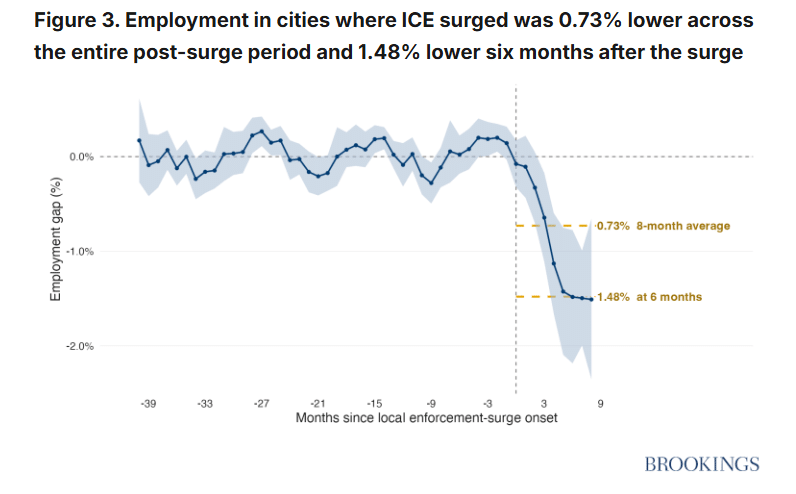
Altogether, Brookings estimated that the enforcement surges were associated with approximately 668,000 fewer jobs across those 86 metro areas.
This figure doesn’t mean ICE directly eliminated 668,000 jobs or arrested that many workers. It represents the estimated difference between employment after the enforcement surge and the level researchers calculate those cities would otherwise have reached.
The same applies to San Antonio’s estimated loss of nearly 8,200 jobs.
Why Can ICE Arrests Affect More Jobs Than People Arrested?
Brookings identified roughly 52,000 “excess arrests,” or arrests above expected levels based on previous trends. For every excess arrest, researchers found an association with about 13 fewer jobs across the local economy.
Several factors could explain the difference. Workers who aren’t arrested may stop reporting to work because they fear encountering immigration agents, while businesses that lose workers can struggle to maintain operations. Families may also reduce spending and other activities amid increased enforcement, affecting local businesses.
The effects aren’t limited to immigrant workers. Brookings estimated that between 51,000 and 297,000 of the jobs lost or foregone would otherwise have been held by U.S.-born workers.
Construction Has Been Particularly Vulnerable
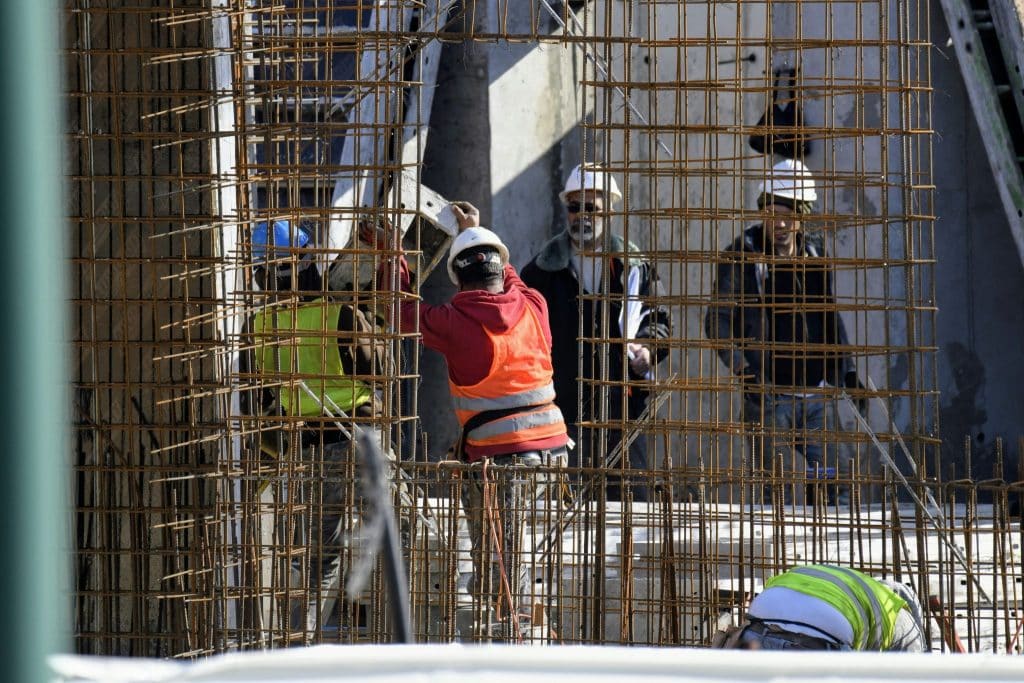
Construction illustrates how those effects can spread.
Across the metros studied by Brookings, construction employment averaged 2.2% below expected levels following enforcement surges, representing an estimated 102,000 jobs.
The industry’s workforce helps explain its vulnerability in Texas. According to a Federal Reserve Bank of Dallas analysis, foreign-born workers (which doesn’t mean undocumented workers) accounted for 53% of Texas construction trades workers in 2024, compared with 18% of the overall workforce.
In a late-2025 survey, 41% of Texas construction firms said they had been directly or indirectly affected by immigration enforcement. About 20% reported that workers had left or failed to report because of actual or rumored enforcement activity.
The Impact in the Rio Grande Valley
ICE arrested more than 9,100 people in South Texas after President Donald Trump returned to office, accounting for nearly one-fifth of statewide arrests, according to government data analyzed by The Texas Tribune.
By late 2025, builders were reporting that workers were staying away from construction sites because of enforcement activity and fears of additional raids. During the third quarter, construction employment in the Rio Grande Valley fell 5%.
The disruption has extended beyond job sites. Mario Guerrero, executive director of the South Texas Builders Association, said earlier this year that construction loans in the region had fallen about 30% compared with the previous year.
The Pressure Builds Across Texas
The same workforce pressures are showing up more broadly across Texas.
A Federal Reserve Bank of Dallas survey found that about 13% of Texas businesses surveyed in 2025 said immigration policy changes had already negatively affected their ability to hire or retain foreign-born workers. Another 7% expected to experience an impact later that year.
Among affected businesses, 49% reported difficulty hiring because fewer foreign-born workers were applying for jobs.
The labor pressure has continued into 2026. In its June Texas employment forecast, the Dallas Fed said immigration policies constraining labor supply remained one factor holding Texas job growth below its long-term average.
What This Means for San Antonio
The nearly 8,200-job estimate puts a number on an economic effect that can otherwise be difficult to see, but the research has limitations.
Brookings tracks formal payroll employment and doesn’t fully capture cash-based, gig, or informal work. Its employment data also runs only through September 2025, making the findings a snapshot of the short-term effects rather than a final accounting of their economic impact.
Whether those losses persist, grow, or reverse will require more data. For now, the research suggests that the economic effects of increased immigration enforcement are extending beyond the people ICE arrests, reaching workers, businesses, construction projects, and industries across the region.
Author

Related Articles
San Antonio’s Proposed $4.4 Billion Budget, Explained: What Could Change for You
San Antonio’s proposed $4.4 billion budget could affect residents in plenty of everyday ways, and while none of it is final yet, it’s important for residents to stay informed.
San Antonio Votes to Restore Durango Boulevard After César Chávez Abuse Allegations
After 15 years as César E. Chávez Boulevard, one of San Antonio’s oldest street names is coming back.
San Antonio’s People’s Hearing on Immigration Enforcement Put Local Stories at the Center of a National Conversation
We break down the issues that shaped the conversation at the People’s Hearing on Immigration Enforcement in San Antonio and what happens next.