
Why September 16 Matters in San Antonio: The History of Mexican Independence Day
Every September, San Antonio fills with Mexican flags, mariachi, and parades. We explore the history behind September 16.
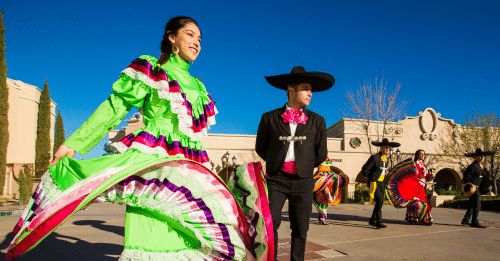
Every September, Hispanic Heritage Month, also known as Latino Heritage Month, its more inclusive alternative, arrives just as San Antonio starts turning red, white, and green for Dieciséis de Septiembre (September 16).
San Antonians have been celebrating Mexican independence for more than 167 years, long before the federal government created “National Hispanic Heritage Week” in 1968. And the connection here runs deeper than cultural pride: San Antonio itself was part of Mexico’s fight against Spanish rule.
September 16 Is Mexico’s Independence Day
Despite a common misconception in the U.S., Mexican Independence Day isn’t Cinco de Mayo.
September 16 commemorates the beginning of Mexico’s struggle for independence from Spain. Early that morning in 1810, Catholic priest Miguel Hidalgo y Costilla called people in Dolores, a parish town in the intendancy of Guanajuato, to take up arms against Spanish colonial rule. That moment became known as the Grito de Dolores, or Cry of Dolores.
The war wouldn’t end for another 11 years, with Mexico achieving independence in 1821 after the signing of the Treaty of Córdoba.
Today, celebrations traditionally begin the evening of September 15 with a reenactment of El Grito. That’s why Mexican Independence Day festivities often span both September 15 and 16.
Cinco de Mayo, meanwhile, commemorates a completely different event: Mexico’s victory over French forces at the Battle of Puebla in 1862.
San Antonio Was Part of the Independence Story
What makes September 16 particularly meaningful in San Antonio is that the independence movement didn’t remain hundreds of miles south of the city.
On January 22, 1811, retired militia captain Juan Bautista de las Casas led rebellious militia members in San Antonio de Béxar in arresting Governor Manuel María de Salcedo and the garrison commandant. Casas and his supporters declared for the revolutionary cause and against Spanish-born royal officials.
The revolt collapsed within weeks, but resistance continued.
In 1813, the Republican Army of the North, associated with the Gutiérrez-Magee expedition, entered and occupied San Antonio de Béxar as part of another effort to break Spanish control. That campaign ended with a devastating defeat at the Battle of Medina south of the city on August 18 of that year, restoring Spanish royalist control over the province.
The history wasn’t as simple as San Antonio unanimously supporting independence. Tejano loyalties were divided, and some residents opposed the rebellion. Still, the events placed San Antonio directly within the history that eventually led to Mexican independence.
Tejanos Kept Celebrating Long After Texas Left Mexico
San Antonio’s relationship with September 16 didn’t disappear when Texas separated from Mexico.
Tejanos continued observing patriotic celebrations since the early 1920s that helped families maintain cultural connections with Mexico and with one another. The Texas State Historical Association says Dieciséis de Septiembre has been celebrated in San Antonio for more than a century and a half.
By the late 19th and early 20th centuries, those celebrations could include music, dancing, food, speeches, parades, traditional clothing, and tributes to historical figures. Mexican and U.S. flags could appear side by side, reflecting the layered identity of Mexican Americans building lives in Texas while preserving traditions tied to Mexico.
That makes the day more than a commemoration of something that happened in 1810. For generations of Tejanos, celebrating September 16 also became a way of keeping cultural memory visible.
How Mexican Independence Day Shaped Latino Heritage Month
Latino Heritage Month wouldn’t enter the national calendar until much later.
In 1968, Congress authorized an annual “National Hispanic Heritage Week” covering the week that included September 15 and 16. In 1988, Congress expanded the observance to a 31-day National Hispanic Heritage Month running from September 15 through October 15.
So Mexican Independence Day isn’t conveniently positioned inside Latino Heritage Month. Latino Heritage Month begins when it does partly because September 16 was already an important date.
The Tradition Is Still Going Strong in San Antonio
More than two centuries after Hidalgo’s call for independence, September 16 remains woven into San Antonio’s calendar.
On September 12, the Avenida Guadalupe Association hosted its 45th annual Dieciséis de Septiembre Parade through the historic Westside, beginning near Guadalupe and Brazos streets. The neighborhood parade brings together residents, community organizations, floats, performers, and generations of families celebrating Mexican heritage.
That same day, Historic Market Square hosted San Antonio’s annual El Grito celebration, which ended with an official civic ceremony hosted by the Consulate General of Mexico in San Antonio. And these are only a couple of the events around September 16.
For younger San Antonians, these celebrations can easily feel like another familiar part of growing up here. But the flags, parades, mariachi, and cries of “¡Viva México!” carry a history stretching from the streets of colonial San Antonio to generations of Tejano families determined to keep that history alive.
Author

Related Articles
Myth vs. Reality: What People Get Wrong About San Antonio
Some San Antonio “facts” have been repeated so often that nobody really questions them anymore. So, we did.
Chicken on a Stick: San Antonio’s Signature Bite and Where to Try It
What started as a Fiesta San Antonio favorite has become a year-round craving, with local restaurants putting their own spin on the crispy classic.
How the Aztec Theatre Survived 100 Years of Reinvention
For nearly 100 years, the Aztec Theatre has welcomed generations of San Antonians through its doors. Here’s how it has survived.