
The Path From Local Flock Cameras to Immigration Enforcement
In this conclusion to our two-part series on Flock cameras, we look at how locally collected license plate data can move between agencies and how it can end up being used in immigration enforcement.
This is Part 2 of a two-part series on Flock cameras, surveillance, and immigration enforcement. If you haven’t yet, read Part 1 here.

Flock cameras, or ALPRs, have changed how police and security operate across the country. But what is happening with all that location data, and is it used in immigration enforcement?
Flock Safety has stated that ICE doesn’t currently have direct access to its network of license plate cameras. But that doesn’t necessarily mean immigration authorities can’t benefit from the data they collect.
Public records have documented local and state law enforcement agencies conducting Flock searches connected to immigration enforcement, including searches performed at the request of federal authorities.
The result is a growing debate over whether technology installed for local public safety can become part of a much broader surveillance system and what that means for people who were never suspected of committing a crime.
Does ICE Have Access to Flock?
Flock says it doesn’t have a contract or partnership with ICE, that federal sharing is disabled by default, and that ICE doesn’t currently have direct access to Flock cameras, systems, or data unless an agency controlling that data explicitly permits it.
However, investigations based on public records have shown that ICE can benefit from Flock data without having its own direct account.
In May 2025, 404 Media reported that search logs from police departments around the country included reasons such as “immigration,” “ICE,” “ICE+ERO,” and “ICE WARRANT,” with some searches conducted at the request of federal law enforcement.
In one Illinois case reported in 2025, a Drug Enforcement Administration agent used the login credentials of a Palos Heights police officer to search Flock for someone suspected of an immigration violation. According to records obtained through public records requests by 404 Media, the search was conducted without the officer’s knowledge. Illinois restricts the use of license plate reader data for immigration enforcement.
And the practice has continued to surface.
Those examples illustrate an important distinction: ICE doesn’t necessarily need direct access to Flock for data from the system to become useful in an immigration investigation. Another law enforcement agency with access can search ICE’s request.
There’s also another piece of Flock’s history with federal immigration agencies.
According to Flock’s own timeline, Homeland Security Investigations, an investigative arm of ICE, participated in a Flock pilot from March 3 through May 1, 2025. Customs and Border Protection participated in a separate pilot from May 9 through August 24, 2025.
Flock says those federal pilot programs have ended and that it stopped conducting federal pilots in August 2025.
Flock Has Restricted Some Cross-State Searches
Concerns about that type of data sharing have already prompted changes.
In June 2025, Flock restricted nationwide access to camera data in California, Illinois, and Virginia, preventing agencies elsewhere from searching cameras in those states through its National Lookup tool.
The changes came after reporting revealed searches related to immigration enforcement and an abortion investigation, and as states enacted or enforced restrictions on how license plate data could be shared.
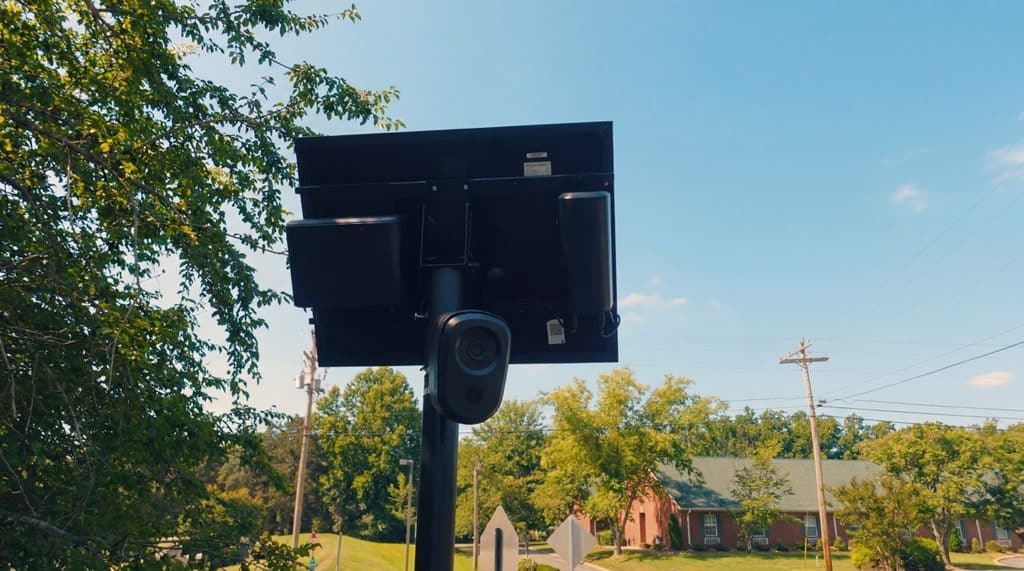

Previously, agencies participating in Flock’s nationwide network could opt to make their cameras searchable by participating agencies in other jurisdictions.
Virginia, for example, adopted restrictions in 2025 prohibiting the sharing of ALPR information with federal or out-of-state agencies in certain circumstances.
But those restrictions have not necessarily prevented improper sharing. In a court filing over Norfolk’s Flock network, the ACLU argued that some Virginia law enforcement agencies had violated state restrictions on federal and out-of-state sharing.
Why This Matters for Immigrant Communities
For immigrant communities, the concern isn’t necessarily that every Flock camera is directly connected to ICE.
The larger issue is how easily information collected for one purpose can potentially become useful for another.
A police department may install cameras to find stolen vehicles or investigate violent crimes. But if that department allows another agency to search its system, or conducts searches at that agency’s request, the same technology can become part of an immigration investigation.
That makes local policies about data sharing, retention, and access especially important.
The controversy has also led some local governments to reconsider whether they want to use the technology at all.
Opposition to ALPR systems accelerated in 2026. According to data compiled by the anti-surveillance group Secure Justice and reported by Ars Technica, 93 cities and counties ended their relationships with Flock in August alone, roughly four times as many as the previous month and the highest monthly total recorded by the group. Flock, however, told Ars Technica that new city partnerships in 2026 were still outpacing nonrenewals by approximately 10 to one.
The ACLU says communities in multiple states have pushed for limits on the technology, particularly around immigration enforcement, reproductive health investigations, and other sensitive uses.
The Bigger Picture: A Growing Surveillance Network
The debate ultimately goes beyond Flock.
Automated license plate readers have existed for years, and other companies also operate similar systems. What has changed is the scale: cameras that once functioned primarily as local tools can now connect to databases that search vehicle movements across cities, counties, and states.
For immigrants and anyone concerned about government surveillance, that leaves an increasingly important question for local officials:
When a community approves a camera meant to watch one street, how far can the information it collects ultimately travel?
Author

Related Articles
Inside the Flock Surveillance Network and What It Means for Immigrants
You may have driven past a Flock camera without even noticing it. But where does the information it collects actually go?

Trump Bars CNN, MS NOW and Politico Reporters From the White House
President Trump has barred CNN, MS NOW and Politico reporters from the White House. Now, all three outlets are taking the administration to court.

The Latina-Led Women’s March That Confronted Fascism in 1937: A Lost Chapter of U.S. History
In 1937, 5,000 women marched through Tampa’s Ybor City to confront fascism in what would become one of the largest political demonstrations led by Latinas in U.S. history. Yet, few know about it.