
Trump Bars CNN, MS NOW and Politico Reporters From the White House
President Trump has barred CNN, MS NOW and Politico reporters from the White House. Now, all three outlets are taking the administration to court.
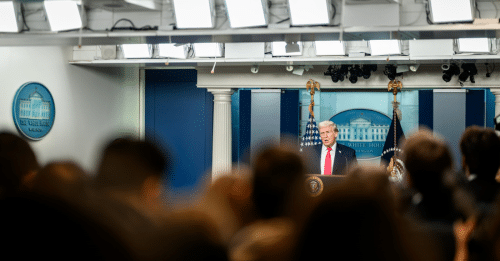
President Donald Trump has barred journalists from CNN, MS NOW and Politico from accessing the White House, saying the decision was based on years of coverage he considers “fake news.”
Trump announced the ban Friday, September 18, saying it was effective immediately. The White House began enforcing it Saturday, when reporters from the three outlets were denied entry and their credentials were deactivated or confiscated.
The decision has prompted a federal lawsuit from all three organizations and an unusual response from the major television networks that share responsibility for providing footage of the president to the wider press corps.
Here’s what happened and where things stand.
Trump Announces the Ban
Trump first announced the restrictions Friday on Truth Social, writing that he was banning CNN, MS NOW and Politico from the White House “effective immediately” because of what he described as their repeated reporting of “fake news.”
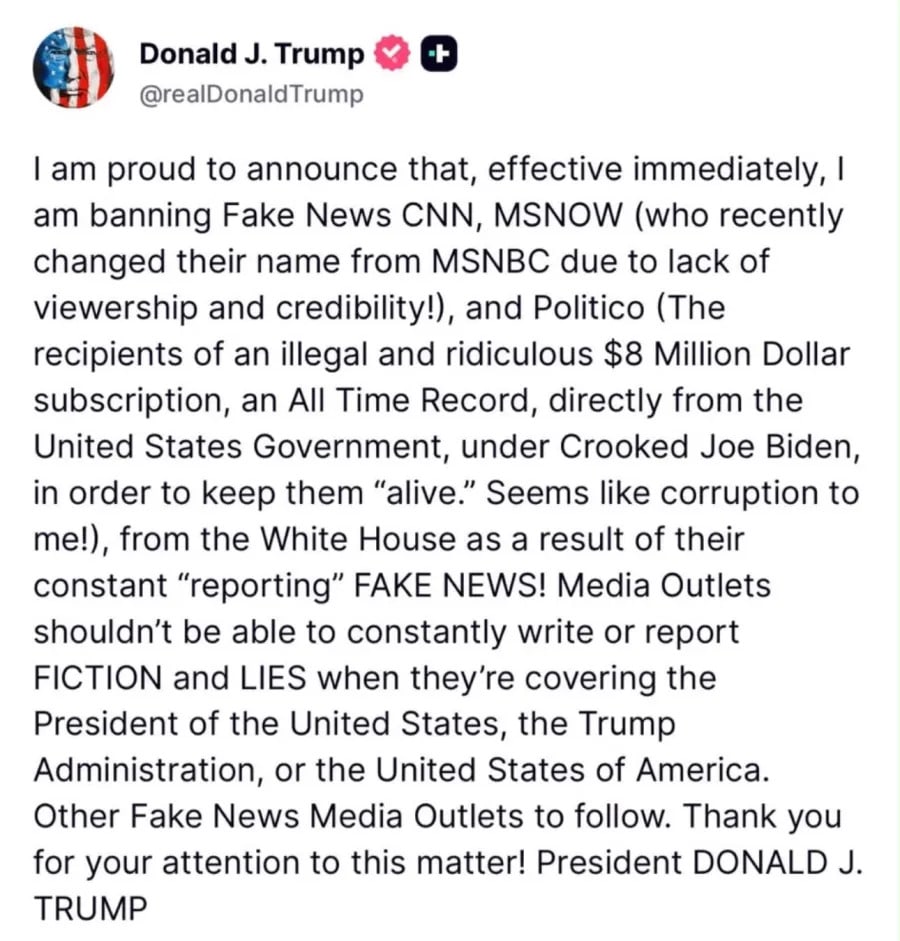
When he was asked about the announcement later that day at an event in the Oval Office, Trump said the organizations publish stories he considers false. “Because they’re fake news,” Trump stated. “You get so tired of reading and seeing fake news.”
Speaking specifically about Politico, he added, “the stories they wrote are fake,” while suggesting other organizations could eventually face similar restrictions. “Our country has to have honest news,” he said.
Trump didn’t point to a specific article or report as the reason for banning the three outlets.
The White House has defended the restrictions by arguing that the First Amendment doesn’t guarantee journalists physical access to White House facilities.
“The First Amendment protects their right to publish; it does not entitle them to a hard pass, briefing room seat, or place in the press pool,” the White House said Monday, September 21, in a public statement. Trump separately wrote that the administration was “not instituting an assault on the Free Press,” but targeting what he considers “fake news.”
Reporters Arrive at the White House and Are Turned Away
The practical impact of Trump’s announcement became clear Saturday, September 19.
CNN senior White House reporter Betsy Klein and MS NOW White House reporter Akayla Gardner both reported that their credentials had been deactivated when they arrived for work. Politico White House reporter Cheyenne Haslett was also denied entry and had her credential confiscated.
Gardner said she passed through two gates before being stopped when her badge was scanned. According to her account, an officer told her that the decision “was above him” and asked her to surrender the credential. Klein similarly said her deactivated badge was taken and she was referred to the White House press office for more information.
All three news organizations condemned the move.
In a statement aired on September 19, CNN said they “will not be deflected from our duty to hold the government and other public bodies to account, and we will continue to report on the actions and processes of this administration without fear or favor,” while Politico Editor-in-Chief Jonathan Greenberger said the outlet would “vigorously defend our First Amendment rights.” MS NOW said it intended to take “any and all steps necessary” to defend its rights and the role of independent journalism.
White House Correspondents’ Association President Jacqui Heinrich also called for the outlets’ access to be restored, arguing that the implications extend beyond the three organizations. A standard used to exclude one news outlet because of its coverage could be applied to any outlet in the future,” Heinrich said.
CNN, MS NOW and Politico Are Taking the White House to Court
On Monday, September 21, CNN, MS NOW and Politico filed a joint federal lawsuit against the Trump administration seeking to restore their access.
The organizations argue that excluding them because of the content of their reporting amounts to viewpoint discrimination and violates the First Amendment. Their complaint also argues that abruptly taking away their credentials without notice or a process to challenge the decision violated their Fifth Amendment due process rights.
In their filing, the organizations called the ban “a direct assault on the First Amendment” and a violation of constitutional principles.
Alongside the lawsuit, the outlets requested a temporary restraining order\ that would prevent the administration from enforcing the ban while the case moves forward.
The case has been assigned to U.S. District Judge Timothy Kelly, who was nominated to the federal bench by Trump during his first term. A hearing on the request for temporary relief is scheduled for Wednesday.
Other Networks Are Pushing Back, Too
The dispute has also disrupted the system television networks use to cover the president.
CNN is one of five major networks, along with ABC, CBS, Fox News and NBC, that rotate responsibility for providing television coverage of presidential events. The footage gathered by whichever network is on duty is then distributed to the other organizations, allowing multiple outlets to cover events where space is limited.
CNN was scheduled for pool duty Monday as Trump prepared to travel to New York for the United Nations General Assembly. After the White House prevented CNN from filling that assignment, the other television networks declined to replace it.
“Effective today, the TV pool will not be covering events designated as pool coverage of the President,” the group said in an email obtained by AP. “There will be no replacement pool put in place.” The group said other pool coverage would continue as normal.
The television networks said the public has an interest in receiving independent information about the government and argued that an administration shouldn’t restrict an outlet because it objects to its reporting.
This Isn’t the Administration’s First Fight Over Press Access
The latest restrictions follow several previous disputes between the Trump administration and news organizations over White House access.
During Trump’s first term, the White House revoked CNN correspondent Jim Acosta’s press pass after a contentious 2018 news conference. A federal judge ordered the credential restored, concluding that the White House had not provided adequate notice or a meaningful opportunity for Acosta to challenge the decision.
Earlier this year, the administration restricted Associated Press access to some presidential events after the AP declined to use “Gulf of America” as its sole name for the Gulf of Mexico. A federal trial judge initially found that the restrictions likely violated the First Amendment and temporarily blocked them, but a divided appeals court later largely reversed that order. The litigation remains ongoing.
The current case raises a related but broader question because the administration has barred entire news organizations rather than an individual reporter.
What Happens Next?
The most immediate development will come in federal court.
CNN, MS NOW and Politico are asking the judge to temporarily restore their White House access while their constitutional claims are litigated.
For now, their journalists remain barred from White House grounds, while the television pool’s refusal to replace CNN has created a second standoff over who determines which journalists are allowed to directly document the president’s activities.
The court’s initial decision will determine whether those restrictions remain in place as the larger lawsuit proceeds.
Author

Related Articles
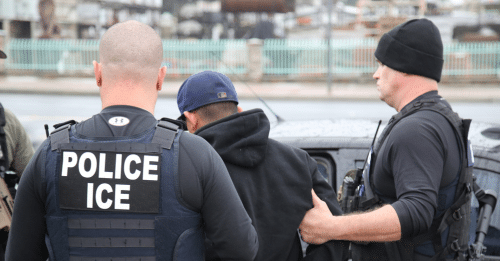
The Path From Local Flock Cameras to Immigration Enforcement
In this conclusion to our two-part series on Flock cameras, we look at how locally collected license plate data can move between agencies and how it can end up being used in immigration enforcement.
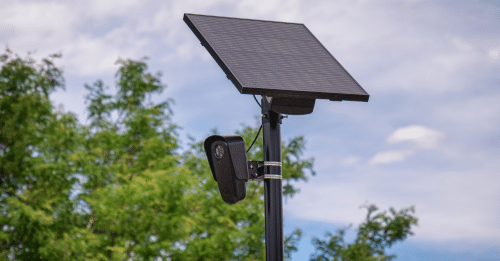
Inside the Flock Surveillance Network and What It Means for Immigrants
You may have driven past a Flock camera without even noticing it. But where does the information it collects actually go?

The Latina-Led Women’s March That Confronted Fascism in 1937: A Lost Chapter of U.S. History
In 1937, 5,000 women marched through Tampa’s Ybor City to confront fascism in what would become one of the largest political demonstrations led by Latinas in U.S. history. Yet, few know about it.