
Labor Day 2026: America Needs The Workers It Refuses to Value
Labor Day celebrates workers, but many of the people doing society’s most essential jobs are still among the lowest paid.
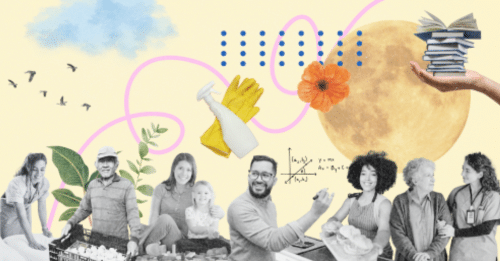
Culturally, Labor Day now unofficially marks the end of summer and the start of mattress sales. But underneath the long weekend and discounts is an economy where wealth keeps piling up at the top while many workers are struggling to keep pace. Wealth concentration has reached levels not seen in decades, wages remain stagnant for many, and the essential workers keeping schools, homes, fields, kitchens, and clinics running are often among the least valued.
That divide is at the heart of the K-shaped economy of 2026, where one part of the country keeps gaining while another falls further behind.
The Wealth Gap Is Back to Gilded Age Levels
The divide did not emerge overnight. Income and wealth inequality have widened significantly since the 1980s, a period that’s also associated with the rise of supply-side economic policies that promised gains at the top would eventually produce more jobs and higher wages.
Decades later, the distribution of wealth tells a very different story.
According to recent data, approximately 68% of U.S. total wealth is owned by the top 10% of earners as of the first quarter of 2026, while the bottom 50% of earners own only about 2.5% of total U.S. wealth. This wealth gap disproportionately impacts the Latino community, where many work in undervalued and underpaid jobs, contributing to the cycle of economic inequality that continues to widen.
The Two Branches of the K
The K-shaped economy makes that divide easier to see.
On the upper branch, asset owners and high earners have continued to make significant gains. The top 1% controlled nearly 32% of household wealth by the third quarter of 2025, amounting to roughly $55 trillion and marking the highest share since the Federal Reserve began tracking the data in 1989. In 2025 alone, the U.S. added 441,000 new millionaires. At the very top, median CEO compensation rose 13% to $4.75 million, pushing the CEO-to-worker pay ratio to 99-to-1, a four-year high.
The experience on the lower branch looks very different. Low-wage workers saw real wages fall 0.3% in 2025, even as productivity continued to climb about 90% since 1979 while typical worker compensation has increased only 33%.
Latino workers are especially exposed to that imbalance because they remain heavily represented in many essential occupations where wages lag behind the broader economy. Latino unemployment also held at 5.0% in 2026, compared with a national rate of 4.3%, another sign of persistent economic disparities.
The Devaluation of Essential Labor
The contradiction becomes clearest when looking at the jobs society cannot function without. If teachers, farmworkers, home health aides, childcare workers, cleaners, and food-service employees collectively stopped showing up, daily life would grind to a halt. Yet many of these occupations remain among the country’s lowest-paid and least-protected.
Consider the pay and representation numbers that define 2026’s lower branch:
- Teachers: Average public school salary rose to $74,495 in 2024–25 (+3.5% nominally), but real earnings are down about 5% over the last decade; teachers earn just 73.1 cents per dollar of comparable professionals.
- Home health and personal care aides: Median wage $35,800/year ($17.21/hr) as of May 2025; this is now the largest U.S. occupation (~4.3M workers).
- Childcare workers: Median $34,980/year ($16.82/hr), about 31% below the national median; Latinos represent ~28.3% of the workforce.
- Cleaning staff: Maids/housekeeping cleaners median $35,510/year ($17.07/hr); janitors/building cleaners median $36,840/year ($17.71/hr), and both are roughly 28–31% below the national median. Latinos are ~49.8% of maids/housekeeping cleaners and ~35.6% of janitors/building cleaners.
- Food service: Food preparation workers’ median is $35,320/year ($16.98/hr), about 31% below the national median; Latinos hold ~29.8% of food preparation and serving-related jobs, often under tip-credit and scheduling instability.
- Farmworkers: Agricultural workers’ median is about $35,890/year ($17.25/hr), with crop/nursery/greenhouse laborers around $35,660/year, which is still ~30% below the national median. 78% of agricultural workers identified as Hispanic/Latino in 2025, laboring under heat, pesticide exposure, and inconsistent access to water and rest.
These numbers reflect the wages, conditions, and demographics of the people who make the economy function and who are most exposed to its fractures.
Labor Day Reflection
As you enjoy the long Labor Day weekend and a much-needed rest from your own daily grind, it’s worth noting how this holiday now mirrors the K-shaped economy: one branch seeing gains, the other stuck in low-wage, high-instability roles.
Calling workers essential means little if their pay, schedules, and safety say otherwise. When the richest 1% own as much as the bottom 90% combined, thanks without tangible change is just a polite way to keep things broken.
Whether they’re cleaning houses, caring for others, working the field, providing education, or serving food, these people’s labor isn’t meaningless; it’s the very foundation of what makes society function.
The foundation of an equitable society is the courage to vote, organize, and push for the systemic changes that can make a real difference.
Author

Related Articles

Surveillance, Privacy, and Immigration Enforcement: The Concerns Behind AI Glasses
We explore what AI glasses could mean for privacy, consent, the people caught on camera, and immigration enforcement.
Eight Latin American Indigenous Women Activists You Should Know About
To celebrate Indigenous Peoples’ Day, we’re highlighting eight women whose activism has made an impact in their communities and far beyond them.

Latino Heritage Month: 30 Micro-Actions to Make a Big Impact
Latino Heritage Month, observed from September 15 to October 15, is a celebration that can be turned into impact through small yet intentional, everyday choices.