
San Antonio Has New Rules for Data Centers. Are They Enough?
San Antonio has approved new rules for future data centers, but questions remain about how much protection they’ll provide for nearby neighborhoods.
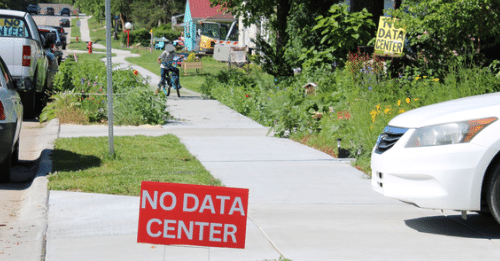

On San Antonio’s Far West Side, residents say data-center growth is changing their surroundings: trees cleared for construction, lights shining into bedrooms and the hum of cooling equipment near homes.
That growth has put City Hall in a difficult position. In August, three councilmembers asked for a temporary pause on new data-center development, citing concerns about neighborhoods, water, electricity, and the Edwards Aquifer. The moratorium didn’t advance, but City Council approved new rules in October that give the Council more authority over where future facilities can be built.
The question now is whether those rules will be enough to accommodate a booming industry without placing too much of its burden on nearby communities.
What West Side Residents Are Experiencing
For residents near existing data centers, daily life has already changed.
During a May 28 public hearing about a Vantage Data Centers facility at 5207 Rogers Road, one attendee described the effects of data centers already near her home. “There are already three data centers in my backyard,” she said, according to San Antonio Current. “Now the light is in my bedroom every night. I don’t sleep. I listen to the hum of the air conditioners.”
Other residents questioned why the facility was partly operational before its first public hearing, which concerned an air-quality permit.
Environmental advocates at the hearing noted that the Rogers Road development is near residential subdivisions, apartments, assisted-living facilities, a hospital and a community college.
Air pollution is another concern. As reported by San Antonio Current, the Rogers Road facility has 65 backup diesel generators, while another nearby Vantage facility on Omicron Drive has 86.
Diesel generators can produce harmful emissions when operating, although their actual impact depends on how frequently they’re used. Vantage representatives told residents the generators would operate during emergencies.
These facilities are part of a larger concentration of data centers on San Antonio’s West Side.
District 6 is a focal point of the debate. In his October 29 statement announcing the new regulations, Councilmember Ric Galvan said a majority of the city’s operating data centers were in his district.
For residents, the concentration has raised questions about how many facilities a neighborhood can accommodate and how much say communities should have before construction begins.
Why San Antonio Considered Pausing Data Center Construction
On August 25, City Council discussed a proposed moratorium requested by Councilmembers Ric Galvan, Ivalis Meza Gonzalez and Teri Castillo.
Data centers house the servers and equipment that power websites, artificial intelligence, cloud computing, and other digital services. They can require substantial electricity and cooling infrastructure.
The proposed moratorium would have temporarily stopped the city from accepting new development plans and permits while officials worked on stronger regulations.
Development Services Director Amin Tohmaz told Council that implementing a moratorium would take more than three months because of required hearings and notification periods, and that the city could halt development for up to 180 days. At least 12 projects already negotiating utility service would be exempt, Texas Public Radio reported.
Council ultimately pursued permanent development-code changes rather than a temporary pause.
What San Antonio’s New Data Center Rules Actually Do
On October 29, City Council voted 9-2 to approve new data-center regulations.
The biggest change is a requirement for specific-use authorization, meaning developers must receive City Council approval for each new data center proposed within city limits.
The rules limit data centers to designated commercial and industrial zoning districts and require case-by-case City Council approval. Council can impose additional site-specific conditions, including:
- Minimum distances from nearby properties and sensitive locations
- Landscaping and building setbacks
- Noise barriers for generators
- Parking, signage and site-access restrictions.
The case-by-case approval process allows Council to impose site-specific protections through public review.
How Much Electricity and Water Do Data Centers Use?
Although the new regulations address where facilities can operate, they don’t directly limit how much electricity or water a data center consumes.
That’s an important distinction because resource demand remains one of the biggest concerns surrounding the industry’s expansion.
According to CPS Energy figures reported by the San Antonio Express-News in March 2026, a large data center can require 40 megawatts of electricity or more, roughly equivalent to the electricity used by 10,000 homes.
The concern grows when multiple facilities request significant amounts of power simultaneously, requiring utilities to plan for additional infrastructure and electricity demand.
Water use presents a similar challenge.
In the same figures reported by the Express-News, San Antonio Water System (SAWS) said existing data centers accounted for about 0.1% of its potable-water usage and 1.25% of recycled-water usage. Ten projects then in the utility’s contracting phase could raise those shares to 0.3% and 12%, respectively.
What About the Edwards Aquifer?
One of the most significant protections in San Antonio’s new regulations is a prohibition on new data centers in the Edwards Aquifer Recharge Zone District.
The Edwards Aquifer is a major drinking-water source for the San Antonio region. Its Recharge Zone is particularly important because it’s where water enters the underground system.
Restricting development in this area is intended to reduce potential risks to the aquifer.
However, the ban is a geographic restriction. It doesn’t limit water or electricity consumption at facilities built elsewhere in the city.
That means CPS Energy and SAWS will continue playing critical roles in determining how future data-center demand is managed.
What Do the New Rules Mean for San Antonio Residents?
For residents, the most immediate change is the opportunity for greater scrutiny of proposed data centers before they receive approval.
If a project is proposed near your neighborhood, City Council can review its location and impose conditions addressing noise, landscaping, setbacks, and site access.
Residents in the Edwards Aquifer Recharge Zone District have additional protection because new data centers are prohibited there.
However, residents elsewhere won’t have the same blanket geographic protection. Individual approvals will determine what safeguards apply.
Residents can review agendas through the city’s Meetings & Agendas page and follow its Council Meeting Participation instructions to comment on Council items. For Zoning Commission cases, consult the separate boards-and-commissions participation instructions.
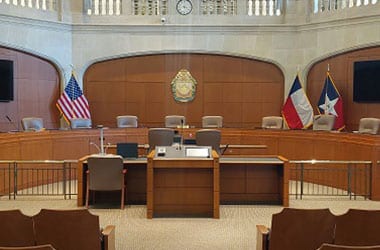
San Antonio’s new regulations give local officials a more direct role in deciding where data centers belong. But important questions remain about how much electricity and water future facilities will require, how surrounding neighborhoods will be affected, and whether residents will have a meaningful say before the next large project arrives near their homes.
Author

Related Articles

When Fear Keeps Communities Home: The Cost of ICE Anxiety in San Antonio
After 20 years of bringing San Antonio families together, Planet K’s Día de los Muertos festival at Woodlawn Lake has been canceled, citing concerns about immigration enforcement.

ICE Arrests in San Antonio Surge to Fourth-Highest in U.S.
The San Antonio ICE field office recorded 5,860 arrests over 81 days, putting it fourth among ICE field offices nationwide.
San Antonio ICE Detention Center Opponents Turn to Possible Legal Action
Opposition to San Antonio’s planned ICE detention center may be heading to court after months of protests and unanswered questions.